|
|
|
|
|
|


at the Henry County Web
|
The Cooperative Extension Service of Henry
County, Kentucky |
|
|
Dear Friends: Hope you find this interesting, stay well.
|
Ag Agent Levi Berg
|
||
Henry County Farmers’ Market
Farm Service Agency’s WHIP+ Program
Private Pesticide Applicator Trainings
|
|||
|
|
|||
Frost and Forages
Crazy enough, fall is around the corner, and that means we need to watch for is potential frosts. The National Weather Service for Louisville, KY states that the average first fall frost is around the end of October, but a frost can come at any time.
After a light frost, certain forages and plants can bring the threat of prussic acid (cyanide) poisoning to livestock. Plants such as sorghum, sudangrass, sorghum-sudan hybrids, johnsongrass, wild cherry, and others can contain cyanide-producing compounds. Prussic acid poisoning causes rapid death in livestock, and livestock can show signs of prussic acid poisoning just 15 minutes after starting to graze the plants after a light frost. Other signs of toxicity include fast breathing, anxiety, trembling, downed animals, convulsions, bright red blood, and frothing at the mouth. Prussic acid poisoning is very similar to nitrate poisoning, but animals with prussic acid poisoning have bright red blood, whereas animals poisoned with nitrates have dark, chocolate-colored blood. If you see these signs, call a veterinarian immediately because prussic acid poisoning can kill livestock extremely quickly.
After a light freeze or you suspect prussic acid, do not graze wilted plants, twisted plants or plants with young tillers for around two weeks. However, plants susceptible to producing prussic acid can be chopped, ensiled or baled, but wait at least 6-8 weeks to feed it to your livestock. For reassurance analyze your suspect forages before feeding by using a cyanide field test kit or have samples tested by a certified lab. The University of Kentucky Veterinarian Diagnostic Lab can test forages for prussic acids, and cyantesmo test strips are available to do a quick field test for prussic acid.
If you have these plants in your pastures, just keep a watchful eye and anticipate if a frost is coming. Forages such as sorghum-sudan hybrids and sudangrasses provide excellent forages, but just make sure to keep your livestock away from them after a light frost. Finally, remember to contact your veterinarian immediately if you suspect prussic acid poisoning in your animals. For further questions, please contact the Henry County Extension Office at 502-845-2811. Information for this article was obtained from the University of Kentucky Master Grazer Educational Program October 2011 Article.
9/16/2020
CAUTION: FARM TRAFFIC
It seems like the summer was hardly here, and passed too fast. It is evenly harder to think that harvest season will soon be here. Grain farmers will be in the fields with combines, and cattle producers will be chopping corn for silage. This activity means that tractors and farm equipment will be on the roads, and drivers and equipment operators need to safely share the road.
Motorist Driving Roads With Agricultural Equipment
• Slow Down: Remember the top speed for tractors in around 20mph, so slow down to give yourself the time and space to access the situation.
• Pay Close Attention: Always give driving your 100% attention and put down the cell phone. In a battle between a tractor and your car, your car will always lose.
• Don’t Get Too Close: Give the farmer space and do not tailgate. Tailgating causes stress and distraction
• Don’t Pass Until It Is Safe: Only pass when you have plenty of space and time to pass the equipment.
• Be Alert For Turns: Look for turn indicators like hand signals and blinkers from the equipment operators. Tractors make very wide turns especially when hauling equipment, so do not try to pass on either side of the equipment while they are turning.
Farm Equipment Operators on the Roads
• Always use headlights, flashing lights, and reflectors while on the road. This helps the motorist recognize that you are on the road and they need to slow down.
• Use escort vehicles anytime tractors are on the road and especially if your equipment is over 13 ft wide.
• Only have licensed drivers and drivers familiar with the equipment to have it on the roads.
• Wait for traffic to clear before entering a public road. Unlike the tractor, most vehicles will be traveling 55 mph instead of 20 mph, so do not pull in front of oncoming traffic.
• Only drive well maintained and cared for equipment on the roads.These are just a few tips to keep in mind during the fall when harvest equipment will be on the roads. It is never a good situation when tractors/farm equipment and motorist collide. Like I mentioned above, the car will always lose to a tractor in a head to head battle, so slow down. If you have further questions, please contact the Henry County Extension Office 502-845-2811. Information for this article was obtained from the Vermont Agency of Agriculture Food and Markets article “Share the Road with Farmers: Be Alert. Be Patient. Be Kind” and the University of Kentucky Agricultural Engineering publication AEN-67.
Unsolicited Foreign Seeds
As many know, over the last few weeks, unsolicited foreign seeds have been coming to individuals’ mailboxes across the commonwealth. These seed packages will not have any information about the seeds, and many believe the seeds are being mailed from China. The main thing to know about this situation is DO NOT PLANT THE SEEDS! This is because we do not know what these seeds could be. We don’t know if these seeds could be a new invasive weed or introduce new diseases. These seeds could be a complete prank, but we do not know. This is why the Kentucky Department of Agriculture is urging those receiving unsolicited seed packets to not plant the seeds, and report the seeds to the Kentucky Department of Agriculture. The unsolicited foreign seed form can be found on the Kentucky Department of Agriculture’s website at https://www.kyagr.com/consumer/documents/Foreign-Seed-Form.pdf.
After filling out the form, mail the seeds to the USDA APHIS facility. The address is on the top of the form. If you have trouble with finding the form or mailing the seeds, please feel free to contact the Henry County Extension Office at 502-845-2811. Please do not just drop off the seeds without speaking to someone from the Henry County Extension Office first. Again, we do not know what these seeds might be, so DO NOT PLANT the seeds on your property!
(Also, do not dispose of with your trash. Torn open seeds may self sprout at a landfill.)
8/19/2020
Nutrient Management Plans
As producers, it is important for us to not only produce the best possible product, but to be good environmental stewards. Nutrient management plans help us do that.
These plans describe how you use fertilizer and/or generated manure in your operation while simultaneously meeting regulations, protecting local waterways and preventing soil erosion. The University of Kentucky recommends that all producers who use fertilizer or manure on their farms develop a nutrient management plan for their operation. These plans can help you reduce fertilizer costs, increase your soil’s organic matter and micronutrients, improve soil structure, increase water filtration and reduce runoff, in addition to protecting Kentucky’s waterways.
You are required to develop a nutrient management plan if you store or stack animal manure, if you plan to sell manure or litter produced on your farm, or if you apply manure, litter or fertilizer to your crops. This plan is in addition to the Kentucky Agriculture Water Quality Plan.
Two types of nutrient management plans exist. The Kentucky Division of Water requires producers who confine animals or use fertilizer to develop a Kentucky Nutrient Management Plan. These plans are also a requirement for the obtainment of a Kentucky No Discharge Permit, which is mandatory for any producer who stores and handles liquid manure or stacks uncovered manure or litter. You can write your own Kentucky Nutrient Management Plan using the UK Cooperative Extension Service publication, ID 211: KY Nutrient Management Planning Guidelines, http://www2.ca.uky.edu/agcomm/pubs/ID/ID211/ID211.pdf, or by using the calculator on the UK Department of Biosystems and Agricultural Engineering’s website at http://www.bae.uky.edu/awqp.
You should develop a Comprehensive Nutrient Management Plan if you plan to apply for financial assistance with the Natural Resources Conservation Service for a manure handling practice. A NRCS technical service provider can write a Comprehensive Nutrient Management Plans for you for a fee.
To develop a nutrient management plan, you need to have the following information handy:• the number of animals you have
• type of operation
• manure handling and storage procedure
• total number of farm acres
• soil sample analysis
• manure sample analysis
• crop rotation
• crop yields
• list of fields receiving manure and the acreage of each of those fields.More information on nutrient management plans is available at the Henry County office of the UK Cooperative Extension Service at 502-845-2811, your local conservation district or by contacting Tammy Barnes, UK Nutrient Management Planner at 859-221-1940 or tammy.barnes@uky.edu.
8/12/2020
Woodlands Could Be Your Farm’s Hidden Asset
A common question I have from every landowner and farmer is “How can I make more money off of my land?” The next question, I will ask will be “What assets or resources do you have on your land?”, and more times than not, most will leave out their woodlands. It may even surprise you that timber is one of the largest agricultural and natural resource industries in Kentucky, and total economic impact of Kentucky’s forests and related industries contributes nearly $13 billion each year to the state’s economy.
One thing people do forget is that your forest should be managed just like crops, fields, gardens and any other agricultural endeavors. You can benefit by understanding the industry and learning basic forestry concepts, such as how to control light and density, manage pests and steward a forest to make it healthier and sustainable. You should also learn about the important tax benefits for timber owners and secondary markets that may be available for non-timber products such as hunting leases, ginseng, shiitake mushrooms and fence posts.
Woodlands also are valuable for services beyond timber production including providing habitat to a wealth of wildlife, from deer to bobcats. They serve as a backdrop for much of the recreational and tourist activities in the state. Another important contribution of woodlands, but harder to put a dollar figure on, are the ecosystem services such as water and air filtration, carbon sequestration and flood control they provide.
More than 11 million of Kentucky’s 12 million forested acres are classified as timberland, meaning they are capable of growing commercial timber at a rate of 115 board feet of wood volume per acre per year. (A board foot is 12 inches by 12 inches by 1 inch). Logging in Kentucky is renewable, as tree growth in the state exceeds annual timber removal. The industry also ensures that commercial operations have a Master Logger graduate on-site and follow best management practices for protecting water quality at harvest sites.
Sawmills and other industries produce much less waste than in the past, utilizing all but 5 percent of wood residue, down from 35 percent in the 1970s. Advances in machinery and utilization of sawdust and bark residue have fueled this significant reduction in waste. Mulch, fuel, composite wood products, charcoal and animal bedding are made from leftover wood, reducing the industry’s impact on the environment.
Forests can be a strong resource for any landowner whether looking to log for profit, manage wildlife habitat, or to just enjoy. Don’t take your forest for granted, and if you would like to learn more about timber management, please contact the Henry County Extension Office at 502-845-2811 or http://forestry.ca.uky.edu/extension-home. Information for this article was obtained from Billy Thomas, UK Extension Forestry Specialist.
7/8/2020
Seeding Forage Crops
I could bet around March, I can always count of at least 20 to 30 calls asking about seeding forages for livestock. However, the best time to seed cool season grasses and many legumes is actually in the fall. Each grass or legume species has different specifications on planting depth, seeding date, and seeding rate, but the first step to a great stand is a soil test. Remember the Henry County Extension Office offers 10 free samples to residents of Henry County, and test usually take between one to two weeks to return.
After you have your soil test done and you know how much fertilizer or lime you need to add, it is time to start thinking about plantings. There are few different ways to plant, either by preparing a seed bed by tilling or my favorite, a no-till drill. The no-till drill is extremely effective if it is calibrated to the proper seeding depth, and seed is planted with minimal disturbance to the soil. Tilling the ground then cultipacking then broadcast seeding works well, but you may experience high amounts of erosion to your freshly till soil if rain occurs.After having the soil tested, applying fertilizer, and knowing how you are going to plant, it is now time to start planting. Below is a list of common legumes and cool season grasses with planting dates, planting rates, and seeding depth.
Alfalfa – Aug 1st-Sep 15th, 15-20 lbs seed per acre, and plant ¼ - ½ inches deep
Red Clover - Aug 1st-Sep 15th, 8-12 lbs seed per acre, and plant ¼ - ½ inches deep
White Clover - Aug 1st-Sep 15th, 1-3 lbs seed per acre, and plant ¼ inch deep
Fescue - Aug 20th-Oct 1st, 15-25 lbs seed per acre, and plant ¼ - ½ inches deep
Kentucky Bluegrass - Aug 15th-Sep 15th, 10-15 lbs seed per acre, and plant ¼ inch deep
Orchardgrass - Aug 20th-Sep 20tg, 15-20 lbs seed per acre, and plant ¼ - ½ inches deep
Above is a quick guide for seeding dates, seeding rates, and seeding depths, but also speak with your seed consultant because some varieties of the same forages could have different specifications for planting. If you have further questions please contact the Henry County Extension Office at 502-649-5342, and have a happy planting. Information was obtained from UK Cooperative Extension Service publication AGR-18.
6/24/2020
Garden Vegetable Preservation
Our gardens are finally starting to produce vegetables and berries. Don’t be like many gardeners I see, and just throw away produce or let it to rot. You have worked hard on your garden, so you should be able to reap the rewards of that garden. Like many gardeners, your garden is probably producing vegetables faster than you can eat them. Do not just give them away if you have too many. Think about preserving them by either freezing or canning. In the old days, canning was essential because many family had to preserve enough food for the winter, but due to freezers, many families can now freeze most garden fresh vegetables to use until the next growing season.
Canning has been around for a long time, and unfortunately, has declined over the years. I remember when I was 5 or 6 years old, every family or almost every family had a canner or pressure canner. Now, it seems maybe one family per road may even use a canner. Canning specifics can be found at the Henry County Extension office because each recipe with have different pressures and times, so be aware of each recipe requirement. However, whichever canner, boiling water or pressure, inspect your canner before each use.
Freezing is another great option for your fresh vegetables, but certain vegetables like tomatoes and squash do not freeze well. However, if freezing your vegetables, blanch them first. Blanching means to place the cleaned/sorted vegetable in boiling water for a specific time, and then place that vegetable in ice cold water to cool before freezing.
Each vegetable will have a different blanching time, and those are below.
2 Minutes: Asparagus, French Cut Green Beans, Small Lima Beans, Diced Carrots, Greens, Peas
3-4 Minutes: Large Asparagus, Regular Cut Green Beans, Medium to Large Lima Beans, Brussel Sprouts, Cauliflower, Corn, Collard Greens, Okra
7-11 Minutes: Whole Corn on the Cob
25-50 Minutes: Beets
Again, each vegetable will have different requirements for freezing and canning, and certain recipes will change with canning type. If you have questions, please contact the Henry County Extension office at 502-845-2811, and don’t let your fresh garden vegetables go to waste. Preserve them by either freezing or canning. Information for this article was found in the “Home Food Preservation” manual available at the Henry County Extension office, and articles created by the University of Kentucky Cooperative Extension Service Articles FCS3-578 and FCS3-335.
6/17/2020
Simple Strategies to Control Mosquitos
Summer is here and so are the mosquitos. They can ruin a great day in the outdoors, and it feels like never-ending battle when you’re fighting those mosquitos. Along with just being pest, mosquitos can carry numerous disease which are becoming more popular. One issue that does arise with mosquito control is many individual just want to use a broad-spectrum insecticide on their yards and around their houses. These insecticides work, but they also kill beneficial insects that you want around houses such as pollinators and bees.
Here is what you need to know about mosquitos. Mosquitos need standing water to develop through their larval stages, and that doesn’t necessarily mean a lake or pond. This standing water could be bird baths, kiddie pools, and even discarded soda pop cans. The key to controlling the mosquitos is to stop them from breeding in the first place. Here are some thing you can do.
• Drain and remove trash, bottles and any debris that holds water.
• Recycle any unused containers that could collect water, especially old tires.
• Change water weekly in bird baths, wading pools, watering troughs and animal bowls.
• Fill in holes, depressions and puddles in your yard.
• Make sure your culverts and ditches are draining properly.
• Check and clean out clogged gutters to ensure drainage.
• Keep ornamental ponds stocked with fish.
• Fix leaky hoses and faucets.
• Drain water from flowerpots and garden containers.
• Turn over wheelbarrows, buckets and other items that collect water.
• Adjust tarps covering woodpiles, boats and grills to remove standing water.
• Encourage natural enemies of mosquitoes, such as warblers, swallows, martins and other insect-feeding birds.Start planning for mosquito control early in the season, but every bit of prevention is beneficial. If you have questions about mosquito and mosquito control, please contact the Henry County Extension Office at 502-845-2811. Information was obtained from Michael Potter, UK Entomologist, and compiled by Katie Pratt, UK Agricultural Communications Specialist.
6/2/2020
Are Garden Weeds Driving You Crazy?
Like many around the county, weeds will be trying to take over everyone’s garden, and it is almost a full time job trying to control the weeds. This is why I want to talk about garden weeds because everyone wants that beautiful, high producing garden.
First off, why are weeds in your garden bad? Weeds cause many problems, but probably the biggest problem is weeds compete with your crops for nutrients, water, and sunlight. Also, some weeds, like quackgrass, can chemically inhibit vegetable plant growth, and others are host for numerous insect pests and disease pathogens. All of these reasons is why you need to control weeds in your garden.
Here are few tips to control weeds in your garden:
-Frequent hoeing or rototilling garden rows while weeds are small.
-Plant crop rows closer so the garden floor is shaded, and reduces light the weed needs to grow
-Plant a new crop after you harvest your primary crop, so land isn’t barren for the weeds.
-Mulch around crops and rows.
-Use black plastic or landscape fabric around your crops. The plastic and fabric conserves water and also inhibits sunlight from reaching the weeds.These are just a few tips to reduce weeds in your garden. One of the most important things to remember is some weeds like redroot pigweed can produce up to 100,000 seeds, so preventing weeds from forming a seed head is a must. Information was obtained from Dr. John Strang, UK Extension Horticulture Specialist. If you have questions, please contact the Henry County Extension Office at 502-845-2811.
5/20/2020
Programs to Potential Help Agricultural Producers
Recently, I have been receiving more phone calls about programs which can help producers, and there are some programs which can help producers financially. The most notable programs are the County Agricultural Investment Program (CAIP) and the Next Generation Program. These programs are cost-share programs which are funded through the Kentucky Agricultural Development Board and the Governor’s Office of Agricultural Policy, and the Henry County Cattlemen’s Association administers the programs here in Henry County. The application period for both programs is scheduled for the month of June. CAIP is a $2,500 cost share meaning that you can receive $2,500 if the total cost of the project is $5,000. The CAIP grogram can be used to purchase seed, lime, seeders, bull, heifers, fence materials, animal handling facilities, hay storage facilities, and much more. For more specifics on what is or isn’t allowed, you will need to contact Laraine Staples at laraine3173@gmail.com.
The Next Generation program is very similar to CAIP, but only producers from the age of 18 to 40 years old are eligible. This program will reimburse up to $5,000 on a $10,000 project. The projects available are the same as CAIP. For more specifics, please contact Laraine Staples at laraine3173@gmail.com.
The next few programs that can help are through the federal government. The first, Paycheck Protection Program, came about through the Coronavirus Aid, Relief, and Economic Security (CARES) Act. This program was written for small businesses, nonprofits, and others with under 500 employees, but self-employed individuals can also apply. Funds for this program can be used for payroll, interest of mortgages, rent, utilities, and others expenses, but a certain amount of the loan could be waved. This program can be difficult to understand the exact details, and I’m still trying to learn this program. However, to learn the exact details, contact a lender near you for the application for this program.
The next program coming up is the Coronavirus Food Assistance Program (CFAP). On April 17th, the USDA announced that they would be using CARES act funds, and help support losses for agriculture producers where prices and market supply chains have been significantly impacted. Not much information for this program has actually been released, and Farm Service Agency is waiting for further information from the USDA about the program. Shortly, we should be hearing more specifics for this program.
This has been a troubling time for agriculture, and any help is needed for the agricultural community. These programs will not fix those problems, but maybe help keep those farmers in business. If you have further questions, please feel free to contact the Henry County Extension Office at 502-845-2811.
5/13/2020
Safe Handling of Poultry and Other Animal
Most times when we hear about safe handling of livestock, we think about the safety of the animals. However, many times we don’t think about our own safety in regards to diseases, bacteria, and such. Livestock such as poultry, horses, ruminants, and others have digestive systems that can convert forages into usable nutrients, and this is possible because of bacteria, fungi, and protozoa living in the intestinal tracts of those animals. These microorganisms breakdown complex plant material such as cellulose into high energy compounds, and use those compounds for growth, lactation, or gestation. However, it is easy for this microorganisms to be passed through the animal’s intestinal tract, and can be found in the animal’s manure.
Manure from livestock and other animals can contain some nasty microorganisms that can cause serious infections in humans, and can cause extreme ailments. The recent outbreaks of salmonella is a harsh reminder of how easy these ailments can happen. The salmonella outbreaks happened because individuals were not using proper personal hygiene, and were snuggling and kissing their backyard poultry friends. Numerous diseases like salmonella are easily transmitted to humans through contact with fecal matter, and fecal matter could be hanging on the animal’s hair, fur, feathers, feet, and many more areas. If handling animals, be sure to use proper personal hygiene after handling your animals, and sanitize your hands to kill bacteria.
The easiest way to protect yourself is to wash your hands, and prevent animal fecal matter from touching your skin, mouth, and eyes. This means that washing your hands is extremely important, and make sure to wash your hands for at least 20 seconds with soup. While washing your hands, be sure to wash each part of your hands from under finger nails to your wrists. Every inch of your hands need to be washed. If running water isn’t present, use an antibacterial hand sanitizer or wipes. This will at least give you a good chance of killing potential harmful bacteria. Also, children should always be monitored while they are around animals. As many of us know, children love to put anything and everything is their mouths, and that is an extremely easy way for kids to contract certain diseases.
I understand everyone loves their animals and livestock, but be sure to protect yourself. Personal hygiene is easy and can prevent you from obtaining a nasty disease caused by bacteria. Also, be sure to monitor children around animals because most bacterial infection cases are children, so be safe by washing yours and your children’s hands. Information was obtained from Jacqueline Jacob, UK Extension Poultry Project Manager.
5/6/2020
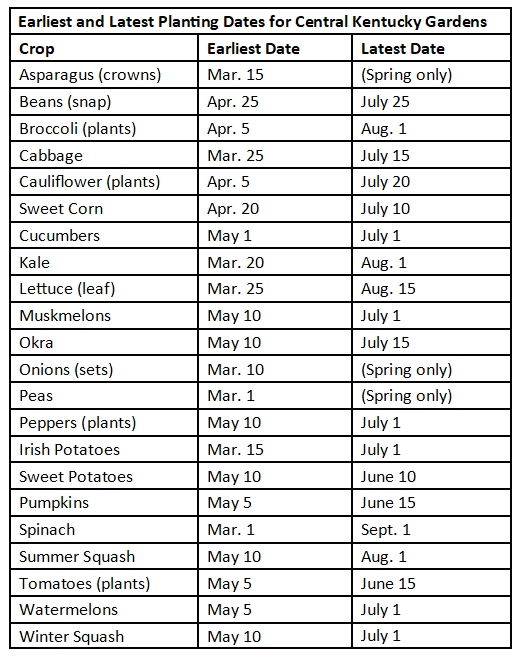
Safe Planting Dates for Your Garden
|
|
4/22/2020
Scouting Can Be Your Best Friend During Crop Season
Even though almost none of our crops are in the ground yet because of the cold spring, but every year, I receive numerous questions about plant disease and insect damage. These calls can be anything from brown rot on grapes to alfalfa weevil control and everything in between. Probably 8 out of 10 calls, my first question will be, “When did you start noticing this problem”, and usually the answer will be, “Today!” By looking at the plant sample, it is clear that the problem has been happening for weeks. In many cases, at this stage, control can be extremely difficult, and this is why I want to bring up scouting of gardens, row crops, and forages. Scouting means walking through your crops viewing development and health of crops, and viewing pest within your crops.
This time of the year, it is easy to overlooking scouting fields because of everything that needs to be done, but you can’t control a pest if you don’t know it is there. Scouting does not need to be difficult, and doesn’t mean you look at every plant in the field. You also need to be on the ground looking at your crops. Most pest are extremely small, so you need to be close to the crops. Frankly, just driving by your crops in a truck or on an ATV does not cut it, because you do not see enough of your crops to make a good decision.
In large crop fields, make a “W” path through the field, and at points of “W” take note of pest such as weeds, insects, and disease. This is very easy and will give you a great representation of what is happening with you crops. With potted plants and gardens, take a quick 10 minutes stroll looking for pests like weeds, insects, and disease. After you know what pests are present, then it is time to control. If you don’t know the pest, I will gladly help you identify it. Also, keep a journal of what you are seeing, because in future years, you can use your journal as a guide of what you might be viewing in your crops.
Pests can cause significant damage to crops, but taking that quick scouting trip could be the difference between being able to control the pest and losing money. Again, scouting isn’t just for large crop fields, it is for gardens, flowers, or anywhere you have crops. If you have further scouting questions, please contact me at the Henry County Extension Office at 502-845-2811. Information for this article came from the University of Missouri Extension Publication IPM1006.
4/8/2020
Are You Prepared for Weeds This Spring?
The grasses are starting to green up which means spring is here. However, along with the grasses, many weeds have started to show up in fields, gardens, and lawns. Weeds can play havoc from causing issues with livestock, medical issues for people, and can take over crop fields. From dandelions to poison hemlock, weeds can come in many shapes and colors, and many times we don’t realize what we have. In most cases, certain weeds mimic harmless flowers. Now, you might be asking, “how do I remove weeds from my land?”, and I will answer, “What weed to you have?”
The first step, to removing harmful weeds from your property, is to properly identify the weeds you have. Just the number of different types of weeds is amazing, and can be extremely difficult to identify. Frankly, until you know what weeds you have, you won’t know how to remove them. UK Extension can help when weed identification because difficult.
The second step is to devise a plan to eradicate the weed. Several methods can be used to control weeds such as mechanical, cultural, and pesticides. Many times in lawns, pastures, and hay fields, mowing or mechanical practices can help because the weeds do not have a change to form a seed head. Occasionally, in some heavily infested crop fields, the field might need to be tilled. Some cultural methods of control includes rotating crops from year to year, avoiding overgrazing of pastures, and maintaining good soil fertility. Mechanical and cultural practice can be help remove weeds, but in some cases, herbicides may be needed.
Herbicides can be beneficial, but herbicides should only be used to help supplement good agricultural practices. Herbicides should not be the first and last step to weed control. There are numerous herbicides out there today, but remember no single herbicide is perfect in removing weeds. When using herbicides, read and follow label directions. The label is the law, and will state which weeds it will control, how much to use, and how to use it. Follow the label exactly, and be advised of potential harmful effects to the environment and yourself.
Weeds can be a problem for anyone, but can be removed. Just remember that you must properly identify the weed in order to properly remove it. The Henry County Extension office at 502-845-2811 will be able to help you identify the weed and help devise a plan to remove the weed. Information was obtained from J.R. Martin and J.D. Green at the University of Kentucky.
3/25/2020
Do You Want the Perfect Garden?
Spring is here, and the grass is finely starting to green. This is also the time of the year that I start receiving plenty of calls about gardening. Below are tips that will help you in your planning your garden.
1) Plan your garden on paper. It is easy to walk into a garden seed section or vegetable plant section of any hardware store, and want one of everything. If you draw out a garden plan, you will have a more realistic vision about what you actually need, and can use at any point throughout the growing season.
2) Select a good gardening site. Your garden should be in an area that has full sun throughout the day, relatively level, well-drained, close to a water source and dries quickly from morning dew.
3) Prepare the soil. A soil test, which is free at the extension office, is the only way to know which nutrients need to added to your soil. Without a soil test, you are just guessing at what your plants need, and it can be very costly. After applying the right nutrients, turn your soil to completely incorporate those nutrients throughout the soil, but do not plow or till the soil when it is extremely wet.
4) Plan only as large a garden as you can easily maintain. This seems like a common sense tip, but it is very easy to overplant. If you over plant, you end up bugging your neighbors and family to take your extra produce or the produce goes to way. Sit down and actually think about what you can handle with regards to weeding and watering.
5) Grow vegetables that will produce the maximum amount of food in your available space. This comes to what space you have. Most plants will limit production if they are planted too close together. Plus too many plants in an area will tend to grow between each other, and you will can have a tangled, impenetrable mess.
6) Plant during the correct season for the crop you want. Follow the packaging or your greenhouses advice with planting dates. Most summer crops cannot handle a slight frost, so you will need to follow the exact timing for planting. If it is too cold or too hot, your plants will not germinate and grow.
7) Choose varieties recommended for KY. Every year, I see multiple issues with garden with regards to diseases. You can choose varieties that are more resistant to diseases, because KY’s humidity is perfect for numerous fungal and bacterial diseases. These varieties help with general maintenance because you are not constantly trimming diseased limbs or removing diseased plants.
8) Harvest vegetables at their proper stage of maturity. Consider how you will store them if you won’t use them right away. Also, consider how you are going to handle produce that is damaged or diseased. Any rotten vegetables, left in the garden, just adds the potential for other vegetables to become diseased and inedible.These are just a few tips that I received from Dr. John Strang, UK Horticulture Extension Specialist. This list is very general, but can help you considerably while planning your garden. Contact the Henry County Extension Office at 502-845-2811 for more detailed and specific information. Also, this information can be found in UK Extension publication, Home Vegetable Gardening publication ID-128.
3/25/2020
Warm Season Annuals
Spring is close to being here, and the cool season grasses will start turning green and growing. However, during June, July, and August, the summer slump starts for our cool season grasses. Shortly, our fescues, orchard grasses, and others are doing great, but when the summer heat starts, the cool season grasses just don’t produce. One potential way to overcome the summer slump is to incorporate warm season annuals into your forage system, and now is the time to start thinking about your summer forage systems.
Warm season annuals such as sorghum, sudan-grass, sorghum X sudangrass hybrids, and millets grow extremely well during the summer months and provide a high quality forage for livestock. These warm season annuals thrive in the heat over 75 degrees F when other grasses are struggling. This is important because with warm season annuals, you will not have a break in growing forages, and most of the time you can obtain yields from 3 to 8 tons of forage per acre. Typical planting of warm season annuals takes place around the middle of May to early June.
These warm season annuals do provide excellent forages for livestock, but caution needs to applied for certain times of the year. Certain warm season annuals such as sorghum, sudangrass and sorghum X sudangrass can contain prussic acid and potentially cause nitrate poisoning in livestock. To prevent prussic acid and nitrate poisoning, do not graze these plants during and shortly after a draught or when plants are wilted. Also, do not graze these forages until they are 18 inches or taller.
Even with the potential of prussic acid or nitrate poisoning, proper management these warm season annuals provide excellent forages during the summer slump. Please contact the Henry County Extension office at 502-845-2811 if you would like further information about warm season annuals. Information was obtained from UKAg Master Grazer.
3/18/2020
Tick Season Is About Here
As I was fishing last weekend, I had a thought, “Ticks are probably going to be here soon.” It was a thought that I did not want to deal with especially since I have had to deal with antibiotics and attached ticks in the past. On two occasions, I found a few attached ticks with the distinct “bull’s eye”, and that is when I really started to care about ticks.
Ticks can be found anywhere from tall grass fields, woodland areas, and your backyards. There are three common types of ticks in Kentucky; the Lone Star Tick, American Dog Tick, and Blacklegged Tick. These ticks will feed on humans, many mammals, and multiple birds, and can carry certain diseases. The lone star tick can transmit erlichiosis with signs of fever, headache, chills, muscle pain, and in some cases a rash. Symptoms appear 1 to 2 weeks after the bite from an infected tick. The American dog tick is a vector for Rocky Mountain spotted fever. In humans, infections usually begin as a sudden onset of fever and headache that appear from 2 to 14 days after feeding by an infected tick. The blacklegged tick is a vector for Lyme disease. Like the other disease, the tick must be attached and feed for at least 24 hours to transfer the pathogen.
Ticks can be nasty little creators, carrying many diseases, but you can protect yourself and pets from ticks potentially carrying diseases. Below is a list of tips that can you help you prevent tick bites.
• Wear light-colored clothing so ticks can be seen easily
• Tuck pants into socks and shirt into pants to keep ticks from reaching your skin.
• Avoid or minimize time in tick habitats
• Use personal protection – repellents (DEET or picaridin) or permethrin-based clothing sprays (Don’t spray permethrin on bare skin)
• Inspect your clothing and body regularly and remove ticks
• Take a warm soapy shower after potential tick exposure
• Wash clothing in hot water and detergent; store clothing in a sealed bag until it can be washed.
• Check dogs and other companion animals frequently and remove ticks as they are found. There are insecticides/repellents that can be used to prevent tick bites.Even with the best prevention methods, ticks may still become attached to you. If so, be sure to correctly remove the ticks after it has attached. Use fine-tipped tweezers to grasp the tick as close to the skin surface as possible. Pull upward with steady, even pressure. Try not to use a twisting or unscrewing method, because the mouthparts of the tick might break off. Also, try not to use irritants such as gasoline or a hot match tip because that could cause the tick to salivate excessively and increase the chances for skin irritation and potential disease transmission.
Luckily in Kentucky, tick-borne disease incidences are very low, but you still need to take preventative measures to decrease the possible of being infected. See your physician if you are feeling symptoms of above disease, irritating rashes from a tick bites, or prolonged exposer to an attached tick. Information was obtained from Dr. Lee Townsend, UK Extension Entomologist, from the Kentucky Pest News.
3/11/2020
Rain and Dirt Make Mud and Problems
Each winter, Kentucky farmers find themselves contending with the effects of mud. Mud can cause a multitude of problems including weak calves, wasted hay, destroyed fields and erosion. Creep pens may be a way to ensure calves get off to a good start and reduce the amount and effects of mud on your farm.
Creep pens allow you to designate a space for calves to rest and, in some cases, get supplemental feed and access to clean water without having to compete with or be in the way of adult cattle. These pens can improve calf health and reduce their risk of being trampled by adults. UK’s Eden Shale Farm in Owen County, which is operated by the Kentucky Beef Network, has had great success using creep pens for their calves.
Calves instinctively want to rest in dry spaces. Oftentimes, this means they lay in wasted hay in the feeding area, but this increases their risk of being trampled. By installing a creep pen, you are allowing only calves to have access to one area of your farm. These pens are created by using creep gates, which have smaller openings. The creep area should provide a dry, comfortable area for calves using bedding or grass. Placing a heavy traffic pad at pen entrances will cut down on erosion and mud. Within the area, a producer may want to give the calves a place to seek shelter and/or supplemental feed. By providing supplemental feed, you also can jump start your weaning program.
Find a dry, well-drained area of your farm to place a creep pen. This area should be near the calving area. You can maximize its use by positioning the pen in a location where there is access to multiple pastures. Ideally, it would be near your winter-feeding area, hay storage facility and machinery storage to help reduce fuel costs and time. Being near the feeding area can also help calves pair up with their mom after they finish eating.
To install a creep area, you will need gates, fence, geotextile fabric, gravel and possibly access to feeders and waterers. You can reduce installation expenses by using materials you have on hand and repurposing an area of your farm that fits creep pen criteria. While you still may have some upfront costs, the cost of losing one calf would pay for this project’s implementation.
Additional information, including a sample design, is in the University of Kentucky Cooperative Extension Service publication, AEN 143, Calf Areas, Pens, or Pastures: A Case Study, which is available online at http://www2.ca.uky.edu/agcomm/pubs/AEN/AEN143/AEN143.pdf or by contacting your Henry Extension office. Information for this article was obtained from Dr. Steve Higgins, Director for Environmental Compliance of the Kentucky Agricultural Experiment Station.
3/1/2020
Introducing Horses to Lush Spring Pastures
Spring isn’t that far away, and guess what? That means cool season grasses are starting to explode with growth. The spring growth provides excellent forages for horses, but the quick change in diet can cause issues in your horses. Horses that have been fed hay all winter have adapted their gut microbes to break down more fibrous material, and the lush pastures are low in fiber compared with cured hay. This means that the spring lush pastures can easily upset your horses’ stomachs because the horse was not accustomed to eating fresh pastures for months. Below are a few tips to help transition your horse from a mainly hay diet to a more pasture diet.
Restrict the grazing time. Allow horse on the new pasture for 20 minutes the first day and increase the grazing time by 5 minutes per day over the a few weeks.
Feed Hay Immediately before horses are turned out on pasture. This will fill their stomachs, so they do not gorge themselves on the lush pastures.
Supplement Grazing with Hay. During early grass growth, the amount of fresh forage might be thin, so the horses might exhaust the grass for a short time. During this short time, they might start ingesting weeds to meet their energy needs, so feeding hay can help alleviate the potential for weed consumption.
Avoid Grazing Early Spring Pasture. The quick change from hay to forage can upset the stomach and cause significant issues. Lush pastures are high in sugars, and too much sugar can cause a horse to founder or go lame.
Use a Grazing Muzzle. The grazing muzzle will slow down the horse’s consumption of lush pasture, and will help prevent spring weight gain.
These tips will help your horses adjust to the new pastures, and hopefully prevent your horse having a stomach ache. Information was obtained from Christine Skelly, Michigan State University.
2/26/2020
Buttercups in Grazed Pastures
Kentucky’s weather has always astonished me around this time of the year. One day will be 65 degrees and sunny, and the next day could be 25 degrees with snow of the ground. Anyways, however you look at it, spring is not far off. Another weed that will start showing itself in pastures is buttercup.
Buttercups are sometimes classified as short-lived perennials, but often grow as winter annuals. The plant typically produce five, shiny yellow petals in the early, and four different species may be found: bulbous buttercup, creeping buttercup, tall buttercup, and small flower buttercup. Each plant is slightly different, but all can be poisonous to livestock if too much is eaten.
Control can be difficult because it usually grows in pastures that are overgrazed, so the desirable plant species will not out compete this weed. Also, spraying for buttercup when yellow blooms are on will not help because buttercup will still be producing seeds for the next year. However, there are a few different control practices that can be used. Herbicides such as products with 2,4D, dicamba, triclopyr, and metsulfuron, are useful in the early spring around late February and early March. Please consult the herbicide label before use. The downfall of herbicides such as 2,4D is that the legumes already in the stand will be killed also. However, the best management for control of buttercup is pasture management. Do not allow livestock to over graze pastures in the fall and winter. Also, plant a heavier stand of beneficial forage species, and those forage species will out compete the buttercup.
Buttercup can be a pain, but using pasture management techniques and herbicides, you can control buttercup in your pastures. Information for this article was obtained from Dr. JD Green in the University of Kentucky Master Grazer Handbook. If you have further questions, please contact the Henry County Extension Office at 502-845-2811.
2/19/2020
There is still time for soil sampling
I talk about soil sampling quite frequently, but there is a reason. A soil sample is the only way to know what your soil needs for crop production. Most soil samples will tell pH, phosphorus levels, potassium levels, and a few micronutrient levels. This is important because there is no guessing game on how much fertilizer or lime is needed to be applied. In many cases, soil sampling could save you hundreds or thousands of dollars because you will only apply what needed. A soil sample is comprised of a small soil sample to represent a large field, yawn, and such. Most soil test only need about a pound of soil, but sample amount depends on the laboratory specifications.
Soil samples are extremely easy to take. First, you need to know which fields you need to sample, and only use one soil sample to represent no more than 20 acres. I like to break fields by either slope, soil type, cropping history, or past management techniques. I do this because nutrients will fluctuate from the top of a hill to the bottom and previous crop, and one soil sample may not be accurate for one whole field. To actually take the soil sample, a soil probe or spade can be used. Just take multiple random 4” cores (around 10 and above) around the field/area you want to sample. Collect those cores in a bucket and mix thoroughly. This method allows for the best representation of soil from that field or area, and that is the key.
There is still plenty of time to have a soil test done for you pasture fields, hay fields, crop lands, lawns, and home gardens. The Henry County Extension Office offers 10 free soil samples for property owners in Henry County. . If you have more questions about soil samples, feel free to contact the Henry County Extension office at 502-845-2811. Information was obtained from UK Cooperative Extension Service publication AGR-16.
2/12/2020
Breeding Soundness Exam
Every year, I will hear stories about how a majority of someone’s cows will come up open during pregnancy checks, and I will hear excuses such as “I think this poor quality hay caused my cows to be open”, or “this mineral was the problem”. However, in most cases, the trusty old bull is not performing as he should, and cows are coming up open. The easiest way to combat a bunch of open cows is to have a breeding soundness exam done on your bulls.
A breeding soundness exam (BSE) is a fertility exam performed on bulls by a veterinarian. The exam looks at three components; scrotal circumference, a physical exam, and a semen evaluation. The vet will check this three areas and determine if your bull is ready for job. Also, a BSE should be done yearly at least a few months before breeding season is done, and only takes a few minutes to perform.
Most bulls have had a BSE done when you bought the bull, but many things can affect a bull’s fertility. Two main causes of decreased performance is poor health and cold temperatures. Probably the number one cause of bull infertility is cold weather. Yes, I know that we have had a mild winter, but any cold spell could impact a bull’s fertility. Poor health can be anything from injury to infection to poor body condition score. Poor health will inhibit the bull’s libido to where he just will not breed.
A breeding soundness exam is the easiest and cheapest way to determine if your bull is ready for breeding season. If you think about it, paying a vet to check your bull is going to be a lot cheaper than potentially having a large portion of your cows coming up open. Information was obtain from Dr. Les Anderson, UK Cattle Reproductive specialist. If you have further questions about BSE’s, please contact the Henry County Extension office at 502-845-2811.
2/5/2020
Tetanus Prevention When Banding Bulls
In the United States, more than 17 million bulls that range in age from 1 day to 1 year are castrated yearly. Tetanus is a potentially life-threatening neurologic disease affecting all species of domestic livestock, including cattle, so it’s important for producers to take steps to prevent it.
It’s easy to miss the subtle clinical signs of tetanus until the disease is advanced. At that point, treatment and management of the affected animal is very difficult, and the chance for recovery is poor. Recognition of the initial signs of stiff legs, an anxious expression with ears held back toward the poll, moderate bloat, erect tail and the unusual “flick” of the third eyelid across the eye leads to an accurate early diagnosis and allows you to begin treatment when it is most effective.
You should give any calf castrated with an elastrator band tetanus prevention in the form of either tetanus toxoid (two doses required with the second given two weeks prior to castration), tetanus antitoxin (given the day of banding) or both, in some cases. Early in life, testicles are smaller and the scrotal sac falls off much more quickly, so banding calves at this stage means they are less likely to develop tetanus, because the tetanus organism does not have time to grow. Earlier castration is relatively quick and easy, and it also lowers the infection risk, as well as the risk of injury to the person performing the castration.
Castration is a necessary management practice for cattle. Work with a local veterinarian to establish the optimal herd health program for your farm and institute an early castration program to minimize the pain, stress and complications that go along with this procedure. If you delay castration until the calves get older and heavier, these calves are at much higher risk for developing tetanus and are twice as likely to get respiratory disease when they arrive in a feedlot or backgrounding operation.
For more information on about preventing tetanus in cattle, contact the Henry County Cooperative Extension Service. Information from this article was obtained from Dr. Michelle Arnold. UK Extension Ruminant Veterinarian.
1/15/2020
Home Composting
Are you trying to figure out what to do with those fallen leaves, grass clippings, and other yard wastes? Don’t throw this in the trash. Try home composting. Home composting is an easy way of recycling nutrients back into your soil. The results of home composting is a high quality compost/fertilizer that can easily be applied to your soil.
Before starting home composting, you need to understand what composting is. Composting is a controlled natural biological process where bacteria, fungi (microbes), and other microorganisms decompose organic materials like leaves and grass clippings. The aftermath is a dark nutrient-rich fertilizer. However, proper composting needs proper oxygen levels, optimal moisture (40-60%), proper carbon:nitrogen levels, and proper temperature of 90 to 170 degrees F.
For oxygen levels, be sure to turn your compost often because the compost needs plenty of oxygen throughout at around 5% oxygen. Turning helps include oxygen into your compost and allows for equal decomposition throughout.
For moisture, the pile needs to stay damp throughout. When too dry, the material will not decompose quickly, and too wet, the pile becomes anaerobic. Anaerobic conditions happen because water displaces the oxygen, and the pile will start releasing unpleasant, potentially toxic gases.
Finally carbon:nitrogen ratios. The optimal ratio is 30 parts carbon to 1 part nitrogen. Materials high in carbon include leaves, straw, pine needles, newspaper, and sawdust. Materials high in nitrogen include manure, food scrapes, and grass clipping. Try to find the perfect ratio because carbon serves as a cell building block and an energy source for the microbes breaking down the compost materials.
Many things can be composted, but there are a few materials that should never be composted. Those include human and pet feces which can transmit diseases, meat, bones, whole eggs, or dairy products. Other things include diseased materials from gardens and landscape trees because the compost pile might not reach high enough temperatures to kill the bacteria and fungi that causes diseases.
Composting can be extremely beneficial for removing old leaves, grass clippings, and agricultural manure, but also provides high quality fertilizer for lawns, yards, and plants. Just be sure to reach optimal moisture levels, carbon:nitrogen ratios, and also be sure to turn your compost pile. Information was obtained from University of Kentucky Extension Publication HO-75, and if you have further questions, please contact the Henry County Extension Office at 502-845-2811.
1/8/2020
Limiting Weaning Stress for Beef Cattle
Over the last few months, I have gotten a few questions from beef producers about weaning calves. Most of the problems such as poor health, poor growth of calves is caused by stress. During weaning, calves experience four types of stress: physical, environmental, nutritional, and social. All of these stresses can be minimized with proper management.
First off, physical stress. Physical stress can be caused from standing long periods in working facilities, being moved, mishandling, castration, and dehorning. You can alleviate most of these of the physical stresses by working calves quickly and calming, castrate and vaccinate at birth, and dehorn earlier in life.
Environment stress can be caused by the climate but also by man. The main environmental stress comes when calves are moved to a dry lot from a clean pasture. In the dry lot, the calves are experiencing a different environment then pastures where they were raised. In many cases, weaning the calves into a separate clean pasture instead of a dry lot could be more beneficial to the calf. The dusty area of a dry lot can cause respiratory problems and decrease weight gain. As for rain, ice, snow, and wind, that is out of your control, but try to plan according with the weather when you are weaning calves.
Social stress is caused by removing the calf from its mother. Even though the separate of calf from mother is essential, there are ways to ease the calves into weaning. Try separating the calves and cows by a good fence. The calves and mother can still touch noses, and this will keep the calves calmer.
Nutritional stress happens when calves are transitioned from a milk and pasture diet to a stored forage and grain diet. You should have high-quality pasture available to calves during weaning time in the spring and the fall. It is recommended to turn calves into the pasture when grasses are 8 to 12 inches tall and letting them graze until grasses are 3 to 4 inches tall.
There are many ways to reduce stress on your calves, so take your time to look at your management techniques. Keep in mind, pasture weaning is extremely effective in reducing calf stress as compared to a dry lot weaning programs. Try it and see how you like it. Just remember, anything new to that calf will add stress, and reducing stress can be the difference between a great pay check and a poor pay check. Information for this article was obtained from Dr. Jeff Lehmkuhler, UK Beef Cattle Specialist.
12/24/2019
Recycle Your Christmas Tree!
After Christmas, I think most families have the same thought “What should I do with my live Christmas Tree?” Let this article help you out. Every year the Kentucky Department of Fish and Wildlife Resources will take your real Christmas trees and recycle them to create fish habitat in lakes near you. The real Christmas trees create brushy nesting and rearing habitat for gamefish as well as creating homes for invertebrates and smaller fishes that provide food for larger fish.
The KDFWR has multiple drop off stations located near us such at the Salato Center in Frankfort and Guist Creek boat dock in Shelbyville. For a complete list of locations, search the KDFWR website for “Xmas tree recycling.” There are a few stipulations about which trees that can used. All Christmas trees must be real and not the fake plastic Christmas trees, and all decorations must be removed from the Christmas trees before drop off. All Christmas trees can be dropped off between 8am and 5pm at the designated drop off locations.
For those that own their own ponds, your Christmas trees can be recycled in your pond. This again is easy and increases fish habitat. All you have to do is weight the bottom end of the Christmas tree with a concrete block or other heavy natural substance, and place the tree and weight in an area where the tree and weight will be completely submerged.
A real Christmas tree can do a lot of good to increase fish habitat, but it also means that you shouldn’t just dispose of your tree in any water way, and only KDFWR has the authority to place habitat structures in public water ways. If you have further questions, please contact the Henry County Extension Office at 502-845-2811 or visit KDFWR website at https://fw.ky.gov/Fish/Pages/Xmas_Tree_Recycling.aspx about Christmas tree drop off locations. All information was obtained from the Kentucky Department of Fish and Wildlife Resources.
12/11/2019
Frost Seeding for Pastures and Hay Fields
Have your pastures and hay fields started to look a little thin? If so, now is the time to potentially remedy that problem. Grasses and legumes start to thin throughout the years, and causes decrease in forage production. A technique called “frost seeding” is a great way to increase your pasture/hay field production without completely renovating your pastures and hay fields.
Frost seeding is when seed is broadcast onto the ground between February 10th and March 1st, and as the ground freezes and thaws, the seeds are worked into the ground and germinate in the spring. However, the seed most be in contact with the soil for frost seeding to work, so pastures/hay fields must be grazed or clipped short prior to frost seeding.
Seeding nitrogen-fixing legumes into existing grass stands will increase nutritional value of the field, and frost seeding legumes can be very successful when performed correctly using the best suited species. Red and white clover are most commonly used frost seeding legumes, but other legumes like birdsfoot trefoil and annual lespedeza establish well with frost seeding. It is not recommended frost seeding alfalfa because of highly inconsistent results, and also, you cannot seed alfalfa into existing alfalfa fields because of auto toxicity issues. As for grasses, perennial ryegrass and annual ryegrass are the only grasses which established well enough to be a reasonable option when using frost seeding.
Frost seeding is a great option for the previously mentioned legumes and grasses. For frost seeding to work, ensure you follow proper seeding rates and use seed from a reputable seed dealer. Also, you will have a poor stand if there is not good soil to seed contact during the winter months. Information was obtained from the UKAg Master Grazer Handbook.
12/04/2019
Cattlemen of the year and Distinguished Service Award for the Henry County Cattlemen’s Association
For 2019, Clint Woods and Family was named the 2019 Henry County Cattlemen of the Year by the previous Henry County Cattlemen of the Year recipients. He was chosen because of his diligence for excellent cattle care, implementing new and innovative practices, and being a leader for the Henry County Cattlemen’s Association. Congratulations Clint Woods and his family!
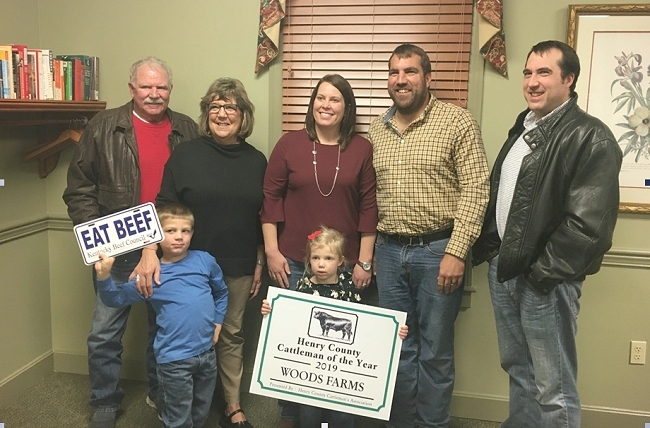
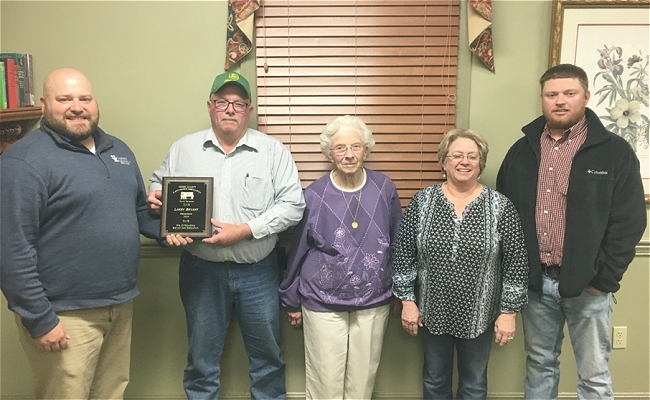
The Henry County Cattlemen’s Association also recognized Larry Bryant for distinguished service to the Henry County Cattlemen’s Association. He has been a board member 10 years, been president for one year, and has always assisted in cooking since the founding of the Henry County Cattlemen’s Association in 2001. Congratulations to Larry Bryant and thank you for all of the assistance and leadership proved to the Henry County Cattlemen’s Association.
|
A Living Christmas Tree Tradition Over the years, I have noticed more families buying living Christmas trees, and then planting the tree with its root ball attached in their yards. A great aspect about this activity is that the trees will be alive for years to come, so your family can always remember your tree and family togetherness. This is a great tradition but special care of your tree is needed. Here are some tips for ensuring successful live tree planting: |
|
|
 |
|
|
11/27/2019
Ice Flowers
|
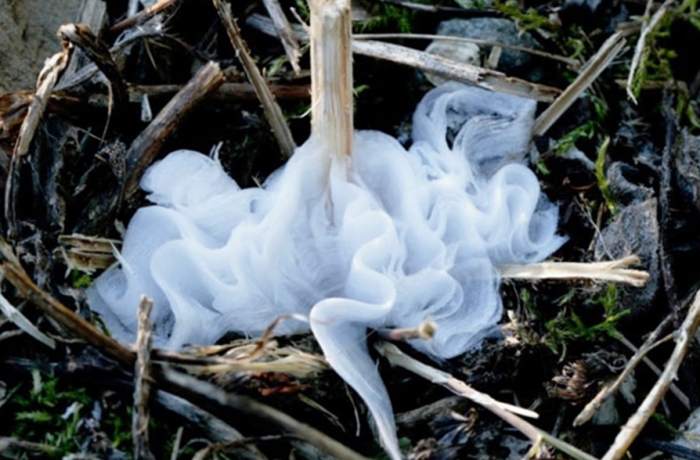
If you were outside last Saturday, the first thing you should have noticed was just how cold it was. That was exactly what I was feeling while walking to my hunting blind in the dark, but it was after the sun was up that I noticed something special. I started noticing ribbon looking ice formations coming out of the stems of a lot of plants. This spurred my interest, and I started trying to figure out why this happened. After some searching, I found my answer. I was seeing ‘Ice Flowers’. Ice Flowers are layers of ice crystals that form when moisture in certain herbaceous plants freezes and splits the stems vertically. When this happens, the ice looks similar to ribbon candy coming from the stems. Ice flowers will only appear when there is sub-freezing air temperatures and adequate soil moisture, and ice flowers can form on many different types of plants. Other names for ice flowers include ice fringes, ice filaments, rabbit ice, and frost flowers. In the future, if we have sudden cold snap that last for a few days, take the time to look for ice flowers around fields, gardens, and wooded areas. Information for this article was obtained from ‘Elusive Ice Fowers: A Natural Phenomenon’ by the University of Missouri Integrated Pest Management. |
|
|
|
 |
11/13/2019
Does Calf Scours Have Your Operation Down?
Every year, I hear producers discuss calf scours in their herds, and every year, those same producers will complain about growth rates of their calves and calf death. Scours is defined by neonatal calf diarrhea occurring within the first 3 weeks of a calf’s life. Rotavirus, coronavirus, bacteria (E. coli K99; Clostridium perfringens Type C, Salmonella spp.) and the parasite Cryptosporidia are the most common causes of neonatal calf diarrhea. All of these factors affect the calf’s stomach lining, and can prevent the absorption of essential nutrients from the milk which leads to weakness and weight loss. Calves surviving scours may perform poorly for the remainder of their lives when compared to healthy calves.
The thing with scours is that it can be avoided with vaccines, proper cow nutrition, and keeping cows out of a filthy environment. Scours vaccines can be expensive, but what is the price of losing calves due to scours. Common vaccines include Scour Bos 9, Guardian, and ScourGuard. One factor that you need to focus on is the timing of the vaccines whether for heifer or cows. The label of these products will state the proper timing.
However, preventing scours takes more than just vaccines. Proper nutrition and clean environment is necessary. Generally, calf scour pathogens build up in the environment as the calving season progresses. Calving in the same area that older calves are in greatly increases the risk to the newborn calf, especially in wet or muddy conditions as we often see in the spring in KY. If possible, pregnant cows close to calving should be rotated onto clean pastures while cow-calf pairs remain on the old pasture. If calving in a barn or shed, the calving area should be kept as clean and dry as possible with frequent changes of bedding to remove the build-up of organisms. Make every effort to get the cow and newborn calf out of the barn quickly to lessen the chances of infection.
Scours can be devastating on a herd from calf loss, poor production, and more. However, remember that calf scours can be prevent by vaccines, clean environment, and proper nutrition. Information was obtained from Dr. Arnold, University of Kentucky Ruminant Extension Veterinarian.
11/06/2019
Controlling Poison Hemlock
I love when fall finally arrives, but I hate the arrival of certain weeds. One of those weeds is poison hemlock, and it is already in the rosette stage. Poison hemlock is originally a native of Europe, and was introduced to North America as a garden/ornamental plant. Poison hemlock is famously known for being the poison that killed Socrates in Athens in 329 B.C. The easiest way to identify young poison hemlock is to look for low-lying rosettes with a purple spotting on the stems, and mature plants will be between 3ft-10ft tall with stout, smooth stems with purple spotting. The leaves have a fern-like appearance with alternating arrangements. Mature poison hemlock can be easily confused with wild carrot (Queen Anne’s Lace) or wild cow parsnip because of the small umbrella-shaped flower clusters, but neither wild carrot nor wild cow parsnip have purple spotting on the stems.
Poison hemlock causes reason for concern because of two reasons; contains highly poisonous alkaloid compounds and is extremely prolific. If ingested, poison hemlock can be deadly to livestock, humans, and other animals. All parts of the plant are extremely poisonous, and the stem and roots are particularly deadly. Grabbing the stem with your bare hand can cause extreme irritation. On many occasions, cattle, horses, and other livestock have been found dead within 30 minutes to two hours after ingesting parts of poison hemlock.
This weed is not only extremely poisonous, but will quickly run wild in pastures, gardens, row crops, property lines, yards, and many more places. This weed is a biennial weed that produces seeds that are easily spread by mowing, road maintenance or agricultural equipment during its second year of life.
Management and prevention of poison hemlock can be tricky because of timing. The key to controlling poison hemlock is to prevent the production of seed. If the plant cannot produce seed, the plant cannot reproduce and spread. So persistent mowing throughout the early spring and summer will keep poison hemlock from producing seeds and spreading. Single plants can be dug with a spade, placed in a trash bag, and disposed, but make sure to always wear gloves and eye protection.
If mowing or digging doesn’t work, you can use certain herbicides to control growth. However, herbicides will only control young, rosettes or very small second-year plants which means herbicides need to be sprayed now in the fall or early in the spring as soon as possible. I personally like using 2,4-D because it will kill the weed without killing grass. However, glyphosate will also work, but glyphosate is a non-selective herbicides that will damage or kill any plant it contacts. Other herbicides that work well are chlorsulfuron, clopyralid, dicamba, and imazapic. For any herbicide, follow the label because THE LABEL IS THE LAW.
Poison hemlock can become a hassle to control, but if you start now you can prevent its spread. Just remember that poison hemlock is extremely poisonous if ingested. Information was obtained from Purdue University Extension publication FNR-437-W and Montana State University Extension publication MT200013AG
10/30/2019
Fall/Winter Weather and Hypothermia
It is finally starting to feel like fall. Crops are finally starting to be harvested, and it isn’t 95 degrees. However, with cold weather comes the risk of hypothermia due to being in the colder weather. Hypothermia can arise in both animals and humans, but I want to focus of humans today.
Hypothermia is a reduction of body temperature below the normal of 98.6 degrees, and can lead to serious motor-function problems, memory problems, and potential death. The symptoms of hypothermia can be classified into two different groups; Mild Hypothermia and Severe Hypothermia.
Mild hypothermia symptoms include uncontrollable shivering, numbness of hands, feet and or face, and inability to complete simple tasks like holding a spade or picking something up. For mild symptoms, take off wet clothes and replace with dry clothes and blankets, move to a warm area, encourage physical activity to generate muscle heat, drink a hot drink without caffeine or alcohol, and rewarm by applying hot-packs or water bottle wrapped in hot towels.
Severe hypothermia symptoms include violent waves of shivering, inability to generate heat, poor muscle coordination and inability to walk, decreased pulse and respiration rates, and irrational behavior and incoherent speech. For severe hypothermia, take that individual to the emergency room while using the same treatments as mild hypothermia.
There is also a misconception that hypothermia will only occur when weather is extremely cold. That is wrong! Some studies have shown that hypothermia symptoms can arise if temperatures are in the 50’s outside.
The largest factor for onset hypothermia is being wet during low temperatures. The moisture will actually drain your body of heat, and wet clothes will not insulate your body in those temperatures.
Just keep this in mind while you are checking your livestock, harvesting crops, or being outdoors. If temperatures are in the 50’s and below and you are wet, please move inside to warm up. Information for this article was found on Ohio Extension Service publication AEX-790.12.
Tips to Pest Proof Your Home
With the colder temperatures, the inevitable pest invasion is starting to happen. Bugs, insects, and many other crawlers are moving from the cold outside temperatures into your home looking for warmer temperatures. This migration of insects happens every fall and winter, but hopefully, using the tips below, you can alleviate some of those pest from entering your home.
• Install door sweeps and thresholds at the base of all exterior entry doors. Gaps of 1/16 inch or less is still enough space for insects to enter under the doors. A good door sweep or threshold will close that gaps preventing insects from crawling under doors.
• Seal openings around windows, doors, fasica boards, and utility openings. All of these areas are common entry points for insects and can easily be plugged. Plug holes with either cement, caulk, urethane expandable foam, steel wool, copper mesh, or other sealants.
• Install ¼-inch wire mesh over attic, roof and crawl space vents. This mesh will prevent insect from entering these areas, but still allows ample air movement. Also, the mesh will prevent other pest such as birds, rodents, bats, and other wildlife from entering your attics and crawl spaces.
• Fix window and door screens. Any tear in a window or door screen will allow numerous amounts of insects in entering the house when doors and windows are opened.
• Consider applying an exterior (barrier) treatment with insecticides. Insecticides should be the final step in pest prevention. A long lasting insecticide with synthetic pyrethroids will have the greatest positive effect for homeowners, and a synthetic pyrethroid insecticide can be found at most hardware or agricultural stores. Just make sure to spray around all exterior doors, windows, garage doors, crawl space entrances, around foundation vents, and up under the siding.Using these tips, hopefully you can prevent insects from entering your house this winter. It is never a good situation when you are constantly trying to remove pest from your house. Just remember, prevention is key to keeping your house pest free. Information was obtained from Michael F. Potter, Extension Entomologist for the University of Kentucky College of Agriculture (Publication ENTFACT-641)
10/16/2019
Early Hay Feeding in Response to Drought
What Next?
After an unseasonably warm and dry fall, we are facing the consequences of a lack of meaningful precipitation, including dormant pastures and limited forage availability.
Many beef operations have already started feeding hay. A challenging spring for making hay and limited late summer rain could be leading us to a hay shortage this year.
Hay will be cheaper when stocks are higher, shortly after being made, in comparison to February when stocks have declined.
Inventory your hay stores now. This is as simple as counting the number of bales for each type (round, large square, small square, etc…) you have. Hopefully, you have a rough idea of how much each weighs. Weight of round bales will depend on size, forage density, forage type and cutting. Our colleagues at Texas A&M created a nice publication on bale weights. You can find it here, https://hayandforage.com/print-article-1767-permanent.html. From their work, a bale that is 4 feet by 5 feet may weigh 880 pounds while a 5-by-6-feet bale could weigh 1,584 pounds. How dense or tight bales are when made will impact the weight. Bales that are 5-by-5 with a density of 9.5 pounds per cubic foot may weigh 935 pounds, while the same size bales with a density of 12.3 pounds per cubic foot will be near 1,200 pounds.
The point here is that when you can, buy on a weight basis rather than the bale. Also, if you are not certain what your bales weigh, when inventorying, estimate on the low end rather than assuming the bales are extremely heavy.
Determining how much hay you will need is your next step. Hay needs are a combination of storage and feeding losses and animal intake. Hay losses during storage can range widely depending on your storage method. Storage in a barn could be 5-10% while hay stored outside on the ground uncovered may have losses of 25-40%. A significant amount of loss from outside storage is due to the bale wicking moisture from the ground and having significant rot on the bottom of the bale. If you set bales on a gravel pad, it will allow precipitation to drain away.
Feeding losses can be significant as well. When using hay rings, use rings with sheeted bottoms to reduce waste. Hay saver type feeders can reduce feeding losses 5-10% as well. If unrolling, consider using a temporary electric wire over the top to reduce losses from cattle bedding down and/or fouling hay with feces and urine.
You may estimate animal intake by assuming 3% of body weight for hay intake. A 1,000-pound bred heifer would potentially consume 30 pounds of hay each day. Mature cows weighing 1,400 pounds would consume about 42 pounds of hay per day. Be sure to account for feeding losses when estimating daily hay allocation. Estimate how many days you will need to feed hay this year. Remember you’ll need to feed hay longer because of the lack of fall pasture growth.
Plan now to inventory your hay and compare to your predicted needs. If you are short on inventory, procure hay now rather than waiting. If hay is in short supply, you can feed grain as a replacement for hay. Be sure to talk to your agricultural and natural resources extension agent at the Henry Cooperative Extension service for help developing a feeding program. This article’s information was gathered by Katie Pratt, UK Agricultural Communications Specialist, and information for this article was obtained from Dr. Jeff Lehmkuhler, UK Beef Extension Specialist.
10/9/2019
Grain Bin Safety
Grain crop harvest is almost here. I love seeing the combines and grain carts working hard to have all grain out of the field. In many cases, a large sum of grain is stored in large grain bins until shipped for sale. Grain bins are extremely beneficial, but can be extremely dangerous.
Growing up, I thought, “How dangerous could a grain bin be?” Well, the answer is very dangerous. If trapped inside the bin, you can be easily pulled under like quicksand and suffocate in the grain. Also it is extremely easy to be caught is working augers, and loss arms, legs, or your life. Below is a few tips to protect yourself while around grain bins.
• Use a long wooden pole to break up crusted grain from the top instead of getting in the bin.
• Wear a harness attached to a properly secured rope if you have to be in the grain bin.
• If you fall in the bin full of grain, stay near the outer wall of the bin and keep walking if the grain should start to flow.
• Try to have at least one person helping load or unload grain in the case that you are entrapped.
• Wear an appropriate dust filter or filter respirator while working around or in the grain bin. The grain fines and dust could cause difficulty breathing.
• Stay out of grain bins, wagons, and grain trucks when unloading equipment is running.
• Turn off augers if you must work inside of the grain bin, and lock out any unloading equipment to prevent someone from unintentionally starting the equipment while you are in the bin.
• Children should never be allowed to play in or around grain bins, wagons, or grain trucks because children can easily be entrapped in the grain or augers.
• Where possible, install ladders inside grain bins in case of emergencies.These are just a few tips to protect yourself while working around grain bins. Entrapments can be devastating, but can be avoided. If you have further safety questions, please contact the Henry County Extension Office at 502-845-2811. Information was obtained from the University of Illinois Extension publication “Grain Bin Safety”.
9/25/2019
Winter Cover Crops for Kentucky Gardens
Remember when the older, wiser gardeners always said, “Make sure to fall till your garden for a good crop next year.” Well, they are right, and you should make sure to till your garden before winter. However, there is more you can do to protect your garden, and give it an earlier start for next. That is by planting cover crops.
Many tobaccos producers already know this, but cover crops have been used to reduce soil erosion and add organic matter to improve the soil. Some cover crops even provide some winter and early spring grazing for their livestock. All of these practices can be used on your gardens. However, the best benefit to garden cover crops is that they take up and hold nutrients, especially nitrogen. This is beneficial because these crops can be mowed and tilled back into the soil in early spring, and there breakdown slowly releases nutrient back to your vegetable plants through the late spring and summer growing months.
Now, you might be asking yourself, “What in the world is a cover crop?” A cover crop is a secondary crop grown on cropland during the late fall and winter months. There are really three main types of cover crops; small grains, grasses, and legumes. Each of these has their benefits and down sides.
First, small grains such as wheat, rye barley, triticale, and oats are very effective. They are excellent at maintaining nutrients within your garden, and preventing loss of nutrients by rain. All of these are best planted in early fall such as now to about mid-october. However, a downside is that these plants can really put on the biomass. This means that these crops will produce a lot of material, and that might be more of a problem because you will not be able to till that much material back into the garden. It is best practice to kill this crop with herbicides in early spring to reduce overgrowth of biomass.
Grasses do a great job at holding nutrients, but they are great at putting down roots and adding organic matter. Most gardens are tilled at the exact same depth for years on end. When this happens, a hard pack will form at the layer of soil directly under the deepest tilling depth. Hard packs can really cause a problem with water retention and draining. When this happens, your garden is likely to flood and nutrients will be lost in the water. However, grasses will produce roots that goes through the hard pack, and in some cases, up to around 30 inches deep. This means that the roots will penetrate that hard pack, and increase drainage while adding organic matter. However, grasses such as annual and perennial ryegrass, and fescue can have the same problems at small grains. They can produce too much top growth, and can be difficult to kill. All of these grasses should be planted by the end of September.
Finally, let’s talk about legumes. Legumes such as clovers, peas, and vetches are great because they can fix nitrogen from the air into the soil. In other words, they save you money on your fertilizer bill. They are hardy, and can add a lot of nitrogen to the soil. However, legumes can be difficult to kill in the spring, and some may winter kill. All of these legumes should also be planted by the end of September likes the grasses.
Cover crops can be added work, and can be difficult to control if you don’t take the time to properly care for them. However, the benefits of decreased erosion, nutrients retention, and added organic matter defiantly outweigh the negatives. If you have questions about cover crops, seeding rates, seeding depths, or control, please contact me at the Henry County Extension Office at 502-845-2811. Information for these article was obtained from UK Extension Publication ID-113.
9/18/2019
Algae Blooms
Every year around the end of the summer, we hear news reports screaming the dangers of blue-green algae. Blue-green algae, also called cyanobacteria, are microscopic organisms normally present in aquatic ecosystems, including lakes and ponds. Blue-green algae can produce neurotoxins that affect the nervous system, or hepatotoxins, which cause liver damage, and some species can produce both types. Thousands of species of blue-green algae have been identified; at least 80 are known to produce toxins that can cause illness and death in animals as well as humans. Heavy growth of these toxin-producing algae “blooms” can cause high concentrations of toxins in the water. In North America, Anabaena, Aphanizomenon, Oscillatoria, and Microcystis are the species of blue-green algae most commonly associated with poisoning.
In Central Kentucky, blooms are most common in late summer and early fall, during hot, sunny weather. Contamination of water with excess nutrients, particularly nitrogen and phosphorus, further encourages algal growth. Common sources of excess nutrients include fertilizer runoff from fields, lawns and gardens, and direct manure and urine contamination from livestock.
Blooms can produce a blue-green sheen on the water surface, or they can be pea-green and thick, like spilled paint. In addition to blue and green, blooms can also be brown or white. They can form scums, slimes, or mats. It is impossible to tell if a bloom is toxic just by its appearance, so you should consider all blooms potentially toxic.
There are some things you can do to protect your pets and livestock from blue-green algae poisoning:
• Provide plentiful clean, clear, fresh water. Keep water bowls, buckets and troughs clean.
• Never let your pets, or children, swim in, play in, or drink water that is discolored, slimy, scummy or otherwise suspicious. Assume any bloom is toxic.
• Pay attention to local health and water advisories and respect any water body closures. Water that appears clean can still contain high concentrations of toxins.
• Fence off farm ponds, creeks and other natural water sources to prevent livestock from contaminating them as well as drinking from them.
• Fence off backyard ponds and other natural water sources to keep pets from accessing them.
• Prevent fertilizer and/or manure from running off into water sources.
• If your pet does access suspicious water, thoroughly wash them with clean, fresh water and prevent them from licking their fur. Wash your own hands and arms after washing your pet, as exposure to blue-green algae can cause skin, eye, nose and throat irritations in humans.
• If animals become ill after exposure to a pond, lake or other natural water source, seek immediate veterinary care – even if the water appeared clean, toxins can still be present. Be sure to tell your veterinarian if your animal might have been exposed to blue-green algae. This can help direct treatment, as many other illnesses can have similar signs.Neurotoxins can cause muscle tremors, seizures, excessive salivation, diarrhea, difficulty breathing and death within hours or even minutes of exposure. Hepatotoxins cause vomiting, diarrhea, bloody or dark stool and pale or jaundiced (yellow) mucus membranes. Animals can die quickly, or they can develop liver failure over several days.
There are no antidotes for blue-green algae toxins, so early decontamination and supportive care can mean the difference between life and death for an exposed animal. If your pet develops these or any other signs after a recent exposure to water, seek immediate veterinary care. It is important to note that this includes exposure to water with no obvious algal bloom. Toxins can persist in the water for a week or longer after the bloom itself has collapsed.
For more information, contact the Henry Cooperative Extension Service. Information for this article was obtained from Dr. Megan Romano, UK VDL Toxicology Resident.
8/28/2019
Frost and Forages
Crazy enough, fall is around the corner, and that means we need to watch for is potential frosts. The National Weather Service for Louisville, KY states that the average first fall frost is around the end of October, but a frost can come at any time.
After a light frost, certain forages and plants can bring the threat of prussic acid (cyanide) poisoning to livestock. Plants such as sorghum, sudangrass, sorghum-sudan hybrids, johnsongrass, wild cherry, and others can contain cyanide-producing compounds. Prussic acid poisoning causes rapid death in livestock, and livestock can show signs of prussic acid poisoning just 15 minutes after starting to graze the plants after a light frost. Other signs of toxicity include fast breathing, anxiety, trembling, downed animals, convulsions, bright red blood, and frothing at the mouth. Prussic acid poisoning is very similar to nitrate poisoning, but animals with prussic acid poisoning have bright red blood, whereas animals poisoned with nitrates have dark, chocolate-colored blood. If you see these signs, call a veterinarian immediately because prussic acid poisoning can kill livestock extremely quickly.
After a light freeze or you suspect prussic acid, do not graze wilted plants, twisted plants or plants with young tillers for around two weeks. However, plants susceptible to producing prussic acid can be chopped, ensiled or baled, but wait at least 6-8 weeks to feed it to your livestock. For reassurance analyze your suspect forages before feeding by using a cyanide field test kit or have samples tested by a certified lab. The University of Kentucky Veterinarian Diagnostic Lab can test forages for prussic acids, and cyantesmo test strips are available to do a quick field test for prussic acid.
If you have these plants in your pastures, just keep a watchful eye and anticipate if a frost is coming. Forages such as sorghum-sudan hybrids and sudangrasses provide excellent forages, but just make sure to keep your livestock away from them after a light frost. Finally, remember to contact your veterinarian immediately if you suspect prussic acid poisoning in your animals. For further questions, please contact the Henry County Extension Office at 502-845-2811. Information for this article was obtained from the University of Kentucky Master Grazer Educational Program October 2011 Article.
8/14/2019
Thank You to All Henry County Fair Volunteers
Last Sunday, I realized that I have just completed my 7th fair with in my extension career. I have worked with three fairs in Indiana and four fairs with the New Castle Lions Club and other fair volunteers. Each fair has its challenges, but every fair has its shining moments which sticks with you forever. As I was reflecting about the positives of this year’s fair, it dawned on me that you can measure the success of a fair by the passion of the volunteers. The New Castle Lion’s Club does a tremendous job hosting a fair with the limited assists at their disposal, and their passion shows with the new events and hurdling obstacles out of their control. These volunteers donate huge amounts of time and missed opportunities with their families to host the fair each year, and even after dealing with a disgruntled visitor, they just think about how they can make the fair better for next year while providing a smile to each visitor. Henry County might not have the biggest fair, but I’m extremely proud to be able to work the New Castle Lion’s club and other fair volunteers in hosting an excellent county fair. Our fair might be small, but always emanates pride for our great county. Thank you to all of the Henry County Fair volunteers for all that you do!
It seems like the summer was hardly here, and passed too fast. It is evenly harder to think that harvest season will soon be here. Grain farmers will be in the fields with combines, and cattle producers will be chopping corn for silage. This activity means that tractors and farm equipment will be on the roads, and drivers and equipment operators need to safely share the road
Motorist Driving Roads With Agricultural Equipment
• Slow Down: Remember the top speed for tractors in around 20mph, so slow down to give yourself the time and space to access the situation.
• Pay Close Attention: Always give driving your 100% attention and put down the cell phone. In a battle between a tractor and your car, your car will always lose.
• Don’t Get Too Close: Give the farmer space and do not tailgate. Tailgating causes stress and distraction
• Don’t Pass Until It Is Safe: Only pass when you have plenty of space and time to pass the equipment.
• Be Alert For Turns: Look for turn indicators like hand signals and blinkers from the equipment operators. Tractors make very wide turns especially when hauling equipment, so do not try to pass on either side of the equipment while they are turning.
Farm Equipment Operators on the Roads
• Always use headlights, flashing lights, and reflectors while on the road. This helps the motorist recognize that you are on the road and they need to slow down.
• Use escort vehicles anytime tractors are on the road and especially if your equipment is over 13 ft wide.
• Only have licensed drivers and drivers familiar with the equipment to have it on the roads.
• Wait for traffic to clear before entering a public road. Unlike the tractor, most vehicles will be traveling 55 mph instead of 20 mph, so do not pull in front of oncoming traffic.
• Only drive well maintained and cared for equipment on the roads.
These are just a few tips to keep in mind during the fall when harvest equipment will be on the roads. It is never a good situation when tractors/farm equipment and motorist collide. Like I mentioned above, the car will always lose to a tractor in a head to head battle, so slow down. If you have further questions, please contact the Henry County Extension Office 502-845-2811. Information for this article was obtained from the Vermont Agency of Agriculture Food and Markets article “Share the Road with Farmers: Be Alert. Be Patient. Be Kind” and the University of Kentucky Agricultural Engineering publication AEN-67.
8/5/2019
Tree Stand Safety
It is amazing how quickly the summer has seemed to fly by, and that means that fall is around the corner. Like many others, I have started scouting and planning my hunting trips, and in this article I want to touch on a subject that always causes some anxiety, treestand safety. Granted, I haven’t hung my treestands yet, but they have had a through looking over and were in great shape. However, this is why I wanted to talk about treestand safety, because setting up any treestand is extremely dangerous and any experienced hunter can fall out of a treestand.
Before the Hunt:
• Read and understand the manufacturer’s instructions for the treestand and full-body harness (FBH).
• Check stands and straps for tears, cracks, or signs of fatigue. If you find these, replace the equipment, and don’t use that broken equipment.
• Practice using the equipment and FBH at ground level before being in the tree.
• Select a healthy, straight tree that is the right size for your stand.
• Avoid using climbing stands on smooth barked trees, especially during icy or wet conditions.During the Hunt:
• Wear your full body harness and don’t just leave it in the vehicle or in the box it came in.
• Attach your FBH to the tree at high enough level where the FBH tether has no slack when sitting in your treestand.
• Never climb into the treestand while carrying equipment. Always pull up equipment with a haul line attached to the treestand.
• Make sure all firearms are unloaded and broadheads are covered while pulling them into the treestand with the haul line.
• Wear boots with non-slip soles to avoid slipping while in the treestand.
• Always have emergency equipment such as a knife, cell phone, flashlight, and or whistle in case you fall out of the stand and assistance is needed.
• DON’T TAKE CHANCES!Treestands can be extremely effective for bow hunting or firearm hunting, but they can be extremely dangerous if used improperly. Also, it is very easy to fall out of the tree, but remember to try and stay calm and call for assistance. Information for this article was obtained from the U.S. Fish and Wildlife Service publication “Treestand Safety Tips”. If you have further questions, please contact the Henry County Extension Office at 502-845-2811.
7/31/2019
Woodlands Could Be Your Farm’s Hidden Asset
A common question I have from every landowner and farmer is “How can I make more money off of my land?” The next question, I will ask will be “What assets or resources do you have on your land?”, and more times than not, most will leave out their woodlands. It may even surprise you that timber is one of the largest agricultural and natural resource industries in Kentucky, and total economic impact of Kentucky’s forests and related industries contributes nearly $13 billion each year to the state’s economy.
One thing people do forget is that your forest should be managed just like crops, fields, gardens and any other agricultural endeavors. You can benefit by understanding the industry and learning basic forestry concepts, such as how to control light and density, manage pests and steward a forest to make it healthier and sustainable. You should also learn about the important tax benefits for timber owners and secondary markets that may be available for nontimber products such as hunting leases, ginseng, shiitake mushrooms and fence posts.
Woodlands also are valuable for services beyond timber production including providing habitat to a wealth of wildlife, from deer to bobcats. They serve as a backdrop for much of the recreational and tourist activities in the state. Another important contribution of woodlands, but harder to put a dollar figure on, are the ecosystem services such as water and air filtration, carbon sequestration and flood control they provide.
More than 11 million of Kentucky’s 12 million forested acres are classified as timberland, meaning they are capable of growing commercial timber at a rate of 115 board feet of wood volume per acre per year. (A board foot is 12 inches by 12 inches by 1 inch). Logging in Kentucky is renewable, as tree growth in the state exceeds annual timber removal. The industry also ensures that commercial operations have a Master Logger graduate on-site and follow best management practices for protecting water quality at harvest sites.
Sawmills and other industries produce much less waste than in the past, utilizing all but 5 percent of wood residue, down from 35 percent in the 1970s. Advances in machinery and utilization of sawdust and bark residue have fueled this significant reduction in waste. Mulch, fuel, composite wood products, charcoal and animal bedding are made from leftover wood, reducing the industry’s impact on the environment.
Forests can be a strong resource for any landowner whether looking to log for profit, manage wildlife habitat, or to just enjoy. Don’t take your forest for granted, and if you would like to learn more about timber management, please contact the Henry County Extension Office at 502-845-2811 or http://forestry.ca.uky.edu/extension-home. Information for this article was obtained from Billy Thomas, UK Extension Forestry Specialist.
20th Annual Henry County Harvest Showcase
Come celebrate Henry County’s rich, rural community and deep agricultural roots at the 20th Annual Henry County Harvest Showcase. This year, the Henry County Harvest Showcase will be on Saturday, July 27th, 2018 from 9am to 3pm at the Henry County Fairgrounds. While here, experience musical acts from local bands, enjoy amazing Henry County grown food, shop at Henry County producer vendors, and meet agricultural producers from Henry County. If you have questions, contact the Henry County Extension Office at 502-845-2811 or Bonnie S. Cecil at 502-532-0230.
2019 Henry County Fair
The 2019 Henry County Fair will run from July 30th to August 3rd at the Henry County Fairgrounds (south of New Castle on 421). There is a $10 gate admission which includes rides, and there is not a parking fee. Come out and see the animal shows, numerous motorsports events, pageants, music, and exhibits from around the county! If you would like further information, follow the Henry County Fair and Pageants facebook page!
7/24/2019
Seeding Forage Crops
I could bet around March, I can always count of at least 20 to 30 calls asking about seeding forages for livestock. However, the best time to seed cool season grasses and many legumes is actually in the fall. Each grass or legume species has different specifications on planting depth, seeding date, and seeding rate, but the first step to a great stand is a soil test. Remember the Henry County Extension Office offers 10 free samples to residents of Henry County, and test usually take between one to two weeks to return.
After you have your soil test done and you know how much fertilizer or lime you need to add, it is time to start thinking about plantings. There are few different ways to plant, either by preparing a seed bed by tilling or my favorite, a no-till drill. The no-till drill is extremely effective if it is calibrated to the proper seeding depth, and seed is planted with minimal disturbance to the soil. Tilling the ground then cultipacking then broadcast seeding works well, but you may experience high amounts of erosion to your freshly till soil if rain occurs.
After having the soil tested, applying fertilizer, and knowing how you are going to plant, it is now time to start planting. Below is a list of common legumes and cool season grasses with planting dates, planting rates, and seeding depth.
Alfalfa – Aug 1st-Sep 15th, 15-20 lbs seed per acre, and plant ¼ - ½ inches deep
Red Clover - Aug 1st-Sep 15th, 8-12 lbs seed per acre, and plant ¼ - ½ inches deep
White Clover - Aug 1st-Sep 15th, 1-3 lbs seed per acre, and plant ¼ inch deep
Fescue - Aug 20th-Oct 1st, 15-25 lbs seed per acre, and plant ¼ - ½ inches deep
Kentucky Bluegrass - Aug 15th-Sep 15th, 10-15 lbs seed per acre, and plant ¼ inch deep
Orchardgrass - Aug 20th-Sep 20tg, 15-20 lbs seed per acre, and plant ¼ - ½ inches deepAbove is a quick guide for seeding dates, seeding rates, and seeding depths, but also speak with your seed consultant because some varieties of the same forages could have different specifications for planting. If you have further questions please contact the Henry County Extension Office at 502-649-5342, and have a happy planting. Information was obtained from UK Cooperative Extension Service publication AGR-18.
7/10/2019
Garden Vegetable Preservation
Our gardens are finally starting to produce vegetables and berries. Don’t be like many gardeners I see, and just throw away produce or let it to rot. You have worked hard on your garden, so you should be able to reap the rewards of that garden. Like many gardeners, your garden is probably producing vegetables faster than you can eat them. Do not just give them away if you have too many. Think about preserving them by either freezing or canning. In the old days, canning was essential because many family had to preserve enough food for the winter, but due to freezers, many families can now freeze most garden fresh vegetables to use until the next growing season.
Canning has been around for a long time, and unfortunately, has declined over the years. I remember when I was 5 or 6 years old, every family or almost every family had a canner or pressure canner. Now, it seems maybe one family per road may even use a canner. Canning specifics can be found at the Henry County Extension office because each recipe with have different pressures and times, so be aware of each recipe requirement. However, whichever canner, boiling water or pressure, inspect your canner before each use.
Freezing is another great option for your fresh vegetables, but certain vegetables like tomatoes and squash do not freeze well. However, if freezing your vegetables, blanch them first. Blanching means to place the cleaned/sorted vegetable in boiling water for a specific time, and then place that vegetable in ice cold water to cool before freezing. Each vegetable will have a different blanching time, and those are below.
2 Minutes: Asparagus, French Cut Green Beans, Small Lima Beans, Diced Carrots, Greens, Peas
3-4 Minutes: Large Asparagus, Regular Cut Green Beans, Medium to Large Lima Beans, Brussel Sprouts, Cauliflower, Corn, Collard Greens, Okra
7-11 Minutes: Whole Corn on the Cob
25-50 Minutes: BeetsAgain, each vegetable will have different requirements for freezing and canning, and certain recipes will change with canning type. If you have questions, please contact the Henry County Extension office at 502-845-2811, and don’t let your fresh garden vegetables go to waste. Preserve them by either freezing or canning. Information for this article was found in the “Home Food Preservation” manual available at the Henry County Extension office, and articles created by the University of Kentucky Cooperative Extension Service Articles FCS3-578 and FCS3-335.
6/26/2019
Simple Strategies to Control Mosquitos
Summer is here and so are the mosquitos. They can ruin a great day in the outdoors, and it feels like never-ending battle when you’re fighting those mosquitos. Along with just being pest, mosquitos can carry numerous disease which are becoming more popular. One issue that does arise with mosquito control is many individual just want to use a broad-spectrum insecticide on their yards and around their houses. These insecticides work, but they also kill beneficial insects that you want around houses such as pollinators and bees.
Here is what you need to know about mosquitos. Mosquitos need standing water to develop through their larval stages, and that doesn’t necessarily mean a lake or pond. This standing water could be bird baths, kiddie pools, and even discarded soda pop cans. The key to controlling the mosquitos is to stop them from breeding in the first place. Here are some thing you can do.
• Drain and remove trash, bottles and any debris that holds water.
• Recycle any unused containers that could collect water, especially old tires.
• Change water weekly in bird baths, wading pools, watering troughs and animal bowls.
• Fill in holes, depressions and puddles in your yard.
• Make sure your culverts and ditches are draining properly.
• Check and clean out clogged gutters to ensure drainage.
• Keep ornamental ponds stocked with fish.
• Fix leaky hoses and faucets.
• Drain water from flowerpots and garden containers.
• Turn over wheelbarrows, buckets and other items that collect water.
• Adjust tarps covering woodpiles, boats and grills to remove standing water.
• Encourage natural enemies of mosquitoes, such as warblers, swallows, martins and other insect-feeding birds.Start planning for mosquito control early in the season, but every bit of prevention is beneficial. If you have questions about mosquito and mosquito control, please contact the Henry County Extension Office at 502-845-2811. Information was obtained from Michael Potter, UK Entomologist, and compiled by Katie Pratt, UK Agricultural Communications Specialist.
6/19/2019
Are Garden Weeds Driving You Crazy?
Like many around the county, weeds are trying to take over everyone’s garden, and it almost a full time job trying to control the weeds. This is why I want to talk about garden weeds because everyone wants that beautiful, high producing garden.
First off, why are weeds in your garden bad? Weeds cause many problems, but probably the biggest problem is weeds compete with your crops for nutrients, water, and sunlight. Also, some weeds, like quackgrass, can chemically inhibit vegetable plant growth, and others are host for numerous insect pests and disease pathogens. All of these reasons is why you need to control weeds in your garden.
Here are few tips to control weeds in your garden:
-Frequent hoeing or rototilling garden rows while weeds are small.
-Plant crop rows closer so the garden floor is shaded, and reduces light the weed needs to grow
-Plant a new crop after you harvest your primary crop, so land isn’t barren for the weeds.
-Mulch around crops and rows.
-Use black plastic or landscape fabric around your crops. The plastic and fabric conserves water and also inhibits sunlight from reaching the weeds.These are just a few tips to reduce weeds in your garden. One of the most important things to remember is some weeds like redroot pigweed can produce up to 100,000 seeds, so preventing weeds from forming a seed head is a must. Information was obtained from Dr. John Strang, UK Extension Horticulture Specialist. If you have questions, please contact the Henry County Extension Office at 502-845-2811.
6/12/2019
Tobacco Cost-Share Options
It is that time of the year again that applications for some tobacco cost-share programs will be available. These year, the Henry County Agricultural Development Council has allotted funds for the County Agricultural Investment Program (CAIP), Next Generation, and Youth County Agricultural Investment Program, and these three programs will be administered by the Henry County Cattlemen’s Association. All three of these programs are cost-share programs that are funded by cigarette taxes collected in the state of Kentucky, and distributed through the Governor’s Office of Ag Policy and the Kentucky Agricultural Development Board. These programs are focused towards agriculture, and are available for agricultural producers in Henry County. CAIP is for any agricultural producer that does an agricultural project, and can be funded $2,500 if the total project total is $5,000 or above. The Next Generation Program is for beginning agricultural producers who have had income from their farm and be between the ages of 18 and 40 years of age, and this program will fund up to $5,000 if the total project cost is $10,000 or above. The final program is the Youth County Agricultural Investment Program. This program is for youth at least 9 years of age and enrolled in elementary, middle, or high school; this includes home schooled students. Like CAIP, this youth program will assist in funding an agricultural project, and is a cost-share type program with a potential maximum of $1,500. All three of these programs can be used a large variety of agricultural projects such as fencing, purchasing livestock, building or upgrading handling facilities, and much more. Applications for CAIP, Youth CAIP, and Next Generation will be available from June 3rd, 2019 to June 28th, 2019 at the Henry County Extension Office, and applications must be returned to the Henry County Extension Office by June 28th, 2019. If you have questions about eligibility and program specific requirement, please contact Laraine Staples on Tuesday at the Henry County Extension Office at 502-845-2811.
5/29/2019
Why Use a Rain Barrel?
I know the excess rain has caused numerous problems in the last few years, but what if you could put that rain to work? One way individuals are utilizing rain water is by collecting it in rain barrels, and using the collected rain water to water plants and livestock in the summer months.
Rain barrels offer a number of benefits such as helping reduce stormwater runoff and potentially protecting home’s, barn’s and other structure’s foundations. Rain barrels collect the water that runs off of impervious surfaces such as rooftops, parking lots, and roads. After collections, the rainwater can be used to water lawns and gardens, rinse tools, supply water for ornamental ponds, and sometimes even watering livestock.
Rain barrels can be purchased from home and garden stores from $100 to $300, but they can easily be built at home for a fraction of the cost. Materials such as plastic food-grade drums and tubing make up the essential items needed. Barrels can range from 55 gallons to thousands of gallons. If watering livestock, I strongly urge you to use some sort of filtering system, and do not water livestock with stormwater that might contain pesticides and manure. The Henry County Extension office has in depth instructions if you are looking are thinking about building a rain barrel, but the ultimate design is up to you.
Rain barrels can be an extremely useful tool to have around your homes and farms, and they are a great way to prevent large amounts of water runoff around structures. Please contact the Henry County Extension office at 502-845-2811 if you have questions about rain barrels. Information was obtained from UK Cooperative Extension Service Publication HENV-201.
5/22/2019
Importance of Forage Testing
Hay making and forage harvesting is almost. Hopefully, we can have some dry weather soon, so the hay season can begin. One aspect usually overlooked by forage producers is forage testing. Forage testing is having samples tested for nutritional values such as energy, protein, fiber content, certain minerals, and such. A forage test is the only way to prove you have a high quality forage whether for sell or for personal use. Yes, you can use your own judgment for certain quality factors such as mold and weeds, but only a forage test can tell you the ultimate quality of your forage. A forage test can be done on anything from dry-cured hay, haylages, silages, or pasture.
For those feeding their own forages, a forage test could be your best friend. Some hay or harvested forages can be deceiving because the forage may look great, but could be lacking in energy or another nutrient. Frankly, if you are feeding a forage with lacking nutritional value, you are losing money because your animals will not perform nearly as well.
For those selling hay, a forage sample could be the difference between selling your hay for a premium or selling it for the same price as a low quality hay. Forage samples prove how good your forage is to buyers, and if it is high quality, you will able to prove to buyers that your forage is worth the cost.
There are many labs across the country that will test samples, but make sure that lab is National Forage Testing Association certified. The most common lab used here in Kentucky is the Kentucky Department of Agriculture Forage Lab. The KDA lab charges $10 per sample, and will have samples results returned within a month. If you need samples tested quickly, you might have to send to a private lab such as DairyOne, but will pay more to have the testing done.
I know this was an extremely quick explanation why forage testing is necessary and beneficial, but if you have further questions about forage sample procedures, please contact the Henry County Extension Office at 502-845-2811. Also, the Henry County Extension Office has a hay probe for loan for those wanting to take forage samples. Information for this article was obtained from the University of Kentucky Master Grazer Educational Program.
5/15/2019
Cressleaf Groundsel
Over the last few weeks, I have received numerous number of calls about the yellow flowers growing in many crop fields. In some cases, a few callers have wondered if Henry County farmers were cultivating flowers. I don’t want to the bearer of bad news, but the yellow flower you are viewing can be one of three weeds; yellow rocket, wild mustard, and cressleaf groundsel. However, most of the yellow flowers in the crop fields are Cressleaf Groundsel. It is a winter annual weed that is very prolific, and can be poisonous to cattle and horses.
Cressleaf groundsel starts as a rosette in late winter, and as it matures, alternately placed leaves will generally have deeply lobed margins. Around late March and early April, yellow disk like flowers will start to appear. Also, cressleaf groundsel can be easily confused with mustard. Mustards have four petal flowers, and cressleaf groundsel will have 7 to 12 petals per flower. These weed can be found anywhere from roadsides, pastures, fields, or other wet, nutrient rich areas. Also, cressleaf groundsel grows best in cool wet conditions and will die out in periods of hot and dry conditions.
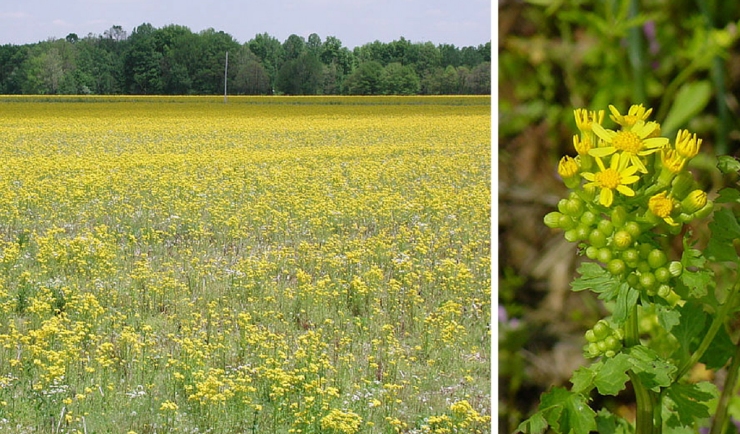
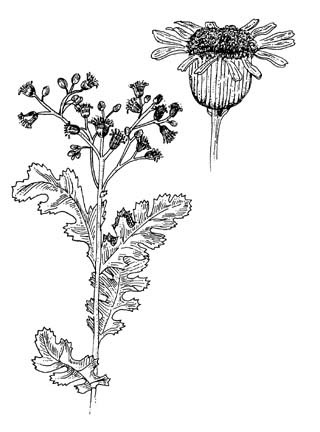
As mentioned above, cressleaf groundsel can be poisonous to cattle and horses. These weed produces toxic alkaloids, and poisoning is most often chronic, taking several weeks to show symptoms. Symptoms in cattle can range from scaly noses, rough coats to listlessness, and a decreased appetite with digestive problems. In severe cases, cattle may be jaundiced and/or photosensitive. Horses can become nervous and have the “sleepy staggers” bumping into objects or becoming entangled in fences. Long term exposure can cause liver damage.
Control can be obtained when in the flowering stages. In crop fields, many mixes can control cressleaf groundsel with common chemicals such as 2,4D, paraquat, sencor or atrazine. In pastures, metsulfuron methyl and 2,4D has been shown to control cressleaf groundsel in the fall and early spring. However, these products will kill broadleaf legumes such as clover and alfalfa.
If you have cressleaf groundsel, it can be control and restrict cattle and horse access to field with a high density of these weed. If you have questions about control or identification, please contact the Henry County Extension Office at 502-845-2811. Information for this article was obtained from Purdue Extension Weed Science, Issue 5/06.
5/8/2019
Importance of Forage Moisture for Hay and Haylage
Hay season is almost here, and due to our rough winter, we could be having some troubles. The fields are not in the best shape due to heavy rains and damaged caused by livestock. Like many famers, in Henry County, preserved forages is almost a way of life, and essentially to profits on most farmers, and without a high quality hay, many farms will be struggling this fall and winter.
With my job, I have received many questions about how to make a high quality preserved foraged, and the first steps to a high quality stored forage, is to determine the moisture content and cut that forage at the right time period. Forages especially grasses should be cut and baled before seed head productions at the preboot stage. This is the time where grass mass production and quality are both high. However, the quality of grasses and legumes greatly decreases as the plant furthers to
When you do decide to cut, you must determine the moisture content before baling. Here is where you have options of haylages or dried-cure hays. High moisture hays, such as haylage, is great when you don’t have the time to allow the forage to cure. These high moisture hays must be cut around and baled when the optimal moisture levels is between 40-60% then wrapped to ferment. When moisture levels are too high, you have a risk of spoilage and colstridia fermentation, which is deadly to cattle. If the haylage is baled at a too low of moisture, the bales will not ferment correctly, and can be very harmful to ruminants. However, if a bale is baled and wrapped at the right moisture, you have an extremely high quality feed for your animals after the bale ferments after a minimum of 30 days.
As for dried hays, you still have to focus on moisture content also. Bales should be made when forage moisture is 22% or below. If the hay has too much moisture, you risk the potential of the bales heating and combusting. This has happened and stories still float around the county of hay barns being burned to the ground. This happens because the high moisture in the middle of the bale creates heat, and as the bale heats from the inside out, the heat reaches the air outside and combusts. To prevent combustion, do not bale hays above 22% and even better is the hay is around 18% moisture.
If you are worried about forage moisture, please contact the Henry County Extension office for assistance. The Henry County Extension Office has purchased equipment that can accurately determine forage moisture within about an hour, and will gladly run forage samples to determine moisture content for you before you think about baling. If you are interested, please contact me at the Henry County Extension Office at 502-845-2811. Information for this article was obtained from the University of Minnesota Extension article “Wrapping Hay” and Michigan State University Extension publication “Harvesting and Handling High Quality Baleage”.
5/1/2019
Scouting Can Be Your Best Friend During Crop Season
Even though almost none of our crops are in the ground yet, but every year, I receive numerous questions about plant disease and insect damage. These calls can be anything from brown rot on grapes to alfalfa weevil control and everything in between. Probably 8 out of 10 calls, my first question will be, “When did you start noticing this problem”, and usually the answer will be, “Today!” By looking at the plant sample, it is clear that the problem has been happening for weeks. In many cases, at this stage, control can be extremely difficult, and this is why I want to bring up scouting of gardens, row crops, and forages. Scouting means walking through your crops viewing development and health of crops, and viewing pest within your crops.
This time of the year, it is easy to overlooking scouting fields because of everything that needs to be done, but you can’t control a pest if you don’t know it is there. Scouting does not need to be difficult, and doesn’t mean you look at every plant in the field. You also need to be on the ground looking at your crops. Most pest are extremely small, so you need to be close to the crops. Frankly, just driving by your crops in a truck or on an ATV does not cut it, because you do not see enough of your crops to make a good decision.
In large crop fields, make a “W” path through the field, and at points of “W” take note of pest such as weeds, insects, and disease. This is very easy and will give you a great representation of what is happening with you crops. With potted plants and gardens, take a quick 10 minutes stroll looking for pests like weeds, insects, and disease. After you know what pests are present, then it is time to control. If you don’t know the pest, I will gladly help you identify it. Also, keep a journal of what you are seeing, because in future years, you can use your journal as a guide of what you might be viewing in your crops.
Pests can cause significant damage to crops, but taking that quick scouting trip could be the difference between being able to control the pest and losing money. Again, scouting isn’t just for large crop fields, it is for gardens, flowers, or anywhere you have crops. If you have further scouting questions, please contact me at the Henry County Extension Office at 502-845-2811. Information for this article came from the University of Missouri Extension Publication IPM1006.
4/24/2019
Do You Want the Perfect Garden?
I’m absolutely loving these warmer temperatures, and spring is here. The grass is finely starting to green, and farmers are preparing fields for crops. This is also the time of the year that I start receiving plenty of calls about gardening. Below are tips that will help you in your planning your garden.
1) Plan your garden on paper. It is easy to walk into a garden seed section or vegetable plant section of any hardware store, and want one of everything. If you draw out a garden plan, you will have a more realistic vision about what you actually need, and can use at any point throughout the growing season.
2) Select a good gardening site. Your garden should be in an area that has full sun throughout the day, relatively level, well-drained, close to a water source and dries quickly from morning dew.
3) Prepare the soil. A soil test, which is free at the extension office, is the only way to know which nutrients need to added to your soil. Without a soil test, you are just guessing at what your plants need, and it can be very costly. After applying the right nutrients, turn your soil to completely incorporate those nutrients throughout the soil, but do not plow or till the soil when it is extremely wet.
4) Plan only as large a garden as you can easily maintain. This seems like a common sense tip, but it is very easy to overplant. If you over plant, you end up bugging your neighbors and family to take your extra produce or the produce goes to way. Sit down and actually think about what you can handle with regards to weeding and watering.
5) Grow vegetables that will produce the maximum amount of food in your available space. This comes to what space you have. Most plants will limit production if they are planted too close together. Plus too many plants in an area will tend to grow between each other, and you will can have a tangled, impenetrable mess.
6) Plant during the correct season for the crop you want. Follow the packaging or your greenhouses advice with planting dates. Most summer crops cannot handle a slight frost, so you will need to follow the exact timing for planting. If it is too cold or too hot, your plants will not germinate and grow.
7) Choose varieties recommended for KY. Every year, I see multiple issues with garden with regards to diseases. You can choose varieties that are more resistant to diseases, because KY’s humidity is perfect for numerous fungal and bacterial diseases. These varieties help with general maintenance because you are not constantly trimming diseased limbs or removing diseased plants.
8) Harvest vegetables at their proper stage of maturity. Consider how you will store them if you won’t use them right away. Also, consider how you are going to handle produce that is damaged or diseased. Any rotten vegetables, left in the garden, just adds the potential for other vegetables to become diseased and inedible.These are just a few tips that I received from Dr. John Strang, UK Horticulture Extension Specialist. This list is very general, but can help you considerably while planning your garden. Contact the Henry County Extension Office at 502-845-2811 for more detailed and specific information. Also, this information can be found in UK Extension publication, Home Vegetable Gardening publication ID-128.
4/10/2019
Tetanus Prevention When Banding Bulls
In the United States, more than 17 million bulls that range in age from 1 day to 1 year are castrated yearly. Tetanus is a potentially life-threatening neurologic disease affecting all species of domestic livestock, including cattle, so it’s important for producers to take steps to prevent it.
It’s easy to miss the subtle clinical signs of tetanus until the disease is advanced. At that point, treatment and management of the affected animal is very difficult, and the chance for recovery is poor. Recognition of the initial signs of stiff legs, an anxious expression with ears held back toward the poll, moderate bloat, erect tail and the unusual “flick” of the third eyelid across the eye leads to an accurate early diagnosis and allows you to begin treatment when it is most effective.
You should give any calf castrated with an elastrator band tetanus prevention in the form of either tetanus toxoid (two doses required with the second given two weeks prior to castration), tetanus antitoxin (given the day of banding) or both, in some cases. Early in life, testicles are smaller and the scrotal sac falls off much more quickly, so banding calves at this stage means they are less likely to develop tetanus, because the tetanus organism does not have time to grow. Earlier castration is relatively quick and easy, and it also lowers the infection risk, as well as the risk of injury to the person performing the castration.
Castration is a necessary management practice for cattle. Work with a local veterinarian to establish the optimal herd health program for your farm and institute an early castration program to minimize the pain, stress and complications that go along with this procedure. If you delay castration until the calves get older and heavier, these calves are at much higher risk for developing tetanus and are twice as likely to get respiratory disease when they arrive in a feedlot or backgrounding operation.
For more information on about preventing tetanus in cattle, contact the Henry County Cooperative Extension Service. Information from this article was obtained from Dr. Michelle Arnold. UK Extension Ruminant Veterinarian.
3/13/2019
Introducing Horses to Lush Spring Pastures
Spring isn’t that far away, and guess what? That means cool season grasses are starting to explode with growth. The spring growth provides excellent forages for horses, but the quick change in diet can cause issues in your horses. Horses that have been fed hay all winter have adapted their gut microbes to break down more fibrous material, and the lush pastures are low in fiber compared with cured hay. This means that the spring lush pastures can easily upset your horses’ stomachs because the horse was not accustomed to eating fresh pastures for months. Below are a few tips to help transition your horse from a mainly hay diet to a more pasture diet.
Restrict the grazing time. Allow horse on the new pasture for 20 minutes the first day and increase the grazing time by 5 minutes per day over the a few weeks.
Feed Hay Immediately before horses are turned out on pasture. This will fill their stomachs, so they do not gorge themselves on the lush pastures.
Supplement Grazing with Hay. During early grass growth, the amount of fresh forage might be thin, so the horses might exhaust the grass for a short time. During this short time, they might start ingesting weeds to meet their energy needs, so feeding hay can help alleviate the potential for weed consumption.
Avoid Grazing Early Spring Pasture. The quick change from hay to forage can upset the stomach and cause significant issues. Lush pastures are high in sugars, and too much sugar can cause a horse to founder or go lame.
Use a Grazing Muzzle. The grazing muzzle will slow down the horse’s consumption of lush pasture, and will help prevent spring weight gain.
These tips will help your horses adjust to the new pastures, and hopefully prevent your horse having a stomach ache. Information was obtained from Christine Skelly, Michigan State University.
3/6/2019
What to do when you have a honey bee swarm
A swarm of honey bees can startle you at first, but don’t do anything drastic if you see a swarm of honey bees. Honey bees will sometime swarm around houses, cars, in trees, and many places, and the worst thing you can do is to kill the swarm of honey bees. The Henry County Extension Office keeps a list of individuals who come to your residents, and remove the swarm of bees for you. If you see a swarm, contact the Henry County Extension Office to find a bee keeper in your area, and help find those bees a new home.
There is still time for soil sampling
I talk about soil sampling quite frequently, but there is a reason. A soil sample is the only way to know what your soil needs for crop production. Most soil samples will tell pH, phosphorus levels, potassium levels, and a few micronutrient levels. This is important because there is no guessing game on how much fertilizer or lime is needed to be applied. In many cases, soil sampling could save you hundreds or thousands of dollars because you will only apply what needed. A soil sample is comprised of a small soil sample to represent a large field, yawn, and such. Most soil test only need about a pound of soil, but sample amount depends on the laboratory specifications.
Soil samples are extremely easy to take. First, you need to know which fields you need to sample, and only use one soil sample to represent no more than 20 acres. I like to break fields by either slope, soil type, cropping history, or past management techniques. I do this because nutrients will fluctuate from the top of a hill to the bottom and previous crop, and one soil sample may not be accurate for one whole field. To actually take the soil sample, a soil probe or spade can be used. Just take multiple random 4” cores (around 10 and above) around the field/area you want to sample. Collect those cores in a bucket and mix thoroughly. This method allows for the best representation of soil from that field or area, and that is the key.
There is still plenty of time to have a soil test done for you pasture fields, hay fields, crop lands, lawns, and home gardens. The Henry County Extension Office offers 10 free soil samples for property owners in Henry County. . If you have more questions about soil samples, feel free to contact the Henry County Extension office at 502-845-2811. Information was obtained from UK Cooperative Extension Service publication AGR-16.
2/27/2019
HAY
The Information below was sent to me by Dr. Lehmkuhler, UK Beef Nutrition Specialist, and I wanted to share this information with you.
Having a limited hay supply can cause stress, but sound management will allow you to conserve hay without sacrificing animal productivity. Remember that the animals’ nutritional needs should always come first. Here are a few tips to help you figure it out.
Determine your hay needs. If you know the mature weights of your cows, multiply the average weight by 3 percent and then by the expected number of days you will feed hay. If a cow at a body condition score of 5 weighs 1,300 pounds, it needs 39 pounds of hay per day. That cow needs about 5,850 pounds of hay for a five-month period. If bales provide 800 pounds of good forage (excluding rot/spoiled hay), you would need 7.3 bales for one cow. Always add 10-20 percent more to cover feeding losses, spoilage and longer feeding periods.
Ideally, you took inventory of your hay in the early winter as hay is cheaper at the start of the winter as opposed to later. Match hay quality to what your animals need. Use limited forage wisely by matching quality to stage of production. Growing and lactating animals have the highest nutritional needs.
As we consider the annual production of a beef cow, nutritionally we tend to break them out to late gestation, early lactation, late lactation, and the dry, mid-gestation period. During late gestation, particularly the last 60-75 days before calving, the fetus grows rapidly, increasing the nutrient needs of the cow. Additionally, mammary tissue development and colostrum formation require additional nutrients. Nutritional requirements increase with milk production.
Peak milk production occurs around eight weeks post-calving and corresponds with the highest nutritional needs during the production year. Nutritional needs may decrease after peak as milk production declines. However, some research has shown that cows may sustain high levels of milk production 120 days post-calving. It is important to monitor cow body condition through lactation and make necessary feeding adjustments. Fall calving beef cows may require additional supplementation to support higher milk production levels.
Feed the highest quality forage during lactation to minimize body condition loss and supplementation needs. As you wean cows and milk production ceases, nutritional needs greatly decrease. Dry, non-lactating cows that have weaned 6-8-month-old calves should be in the second trimester of gestation. The nutritional needs to support fetal development at this point is low and corresponds to the lowest nutritional requirements for the production year. Use lower quality forages to conserve higher quality forages for other phases of production.
You can stretch limited hay stores if you can limit the amount of time cows have access to the hay. You can only do this for mature cows that are in the dry, mid-gestational stage of production and are 5-6 body condition scores. Young and thin cows need additional feed to grow and replenish body stores and should not have their feed limited.
Don’t restrict low-quality forage. Cows will need to consume as much low-quality forage as they can due to the low digestibility and low nutrient concentrations. To do this, separate the herd by age and production as lactating cows, late gestational and young or thin cows.
Reducing feed loss is key. Research demonstrated increased losses when unrolling hay on the ground. Cows trample hay into the mud by walking and laying on it. Defecation and urination will prevent intake as well. If you are using a processor and want to minimize losses, place processed hay in a feeder or bunk rather than on the ground. Hay rings should have sheeting around the bottom to minimize hay losses.
Improved designs that keep bales elevated off the ground while allowing dropped hay to fall within the hay feeder also lower feeding losses. These feeders are more expensive up front but if hay is expensive, they can lower feeding costs. It is important these hay feeders are managed. If hay builds up inside the feeder and the cattle don’t consume the hay due to rot or mold, move the hay ring. If the hay is not of low quality, allow animals to consume the hay that is lying on the ground within the ring before placing a new bale in the feeder. Allowing the hay to build up to the top of the ring/sheeting/tire in these newer designs will increase losses when a new bale is offered as hay will fall out over the edge of the ring or tire. Placing hay rings on a feeding pad can lower losses from hay that falls outside the ring on the ground.
Consider replacing hay with other feedstuffs to supply necessary nutrients. Use caution when restricting hay; the rumen will not be full. Stretch receptors on the rumen will cause cows to eat even though nutritionally, they won’t need to eat. This can lead to tree and fence damage or even cows getting out looking for something to eat. Giving access to low-quality forage can curb this behavior. You can use corn stover, wheat straw and other low-quality forages.
Typical fescue hay contains 50-54 percent of total digestible nutrients and 7-9 percent protein on a dry matter basis. If you offer 1 pound of dried distillers grains, the protein is equal to 3-4 pounds of hay, while the energy from the distillers grains would replace 1.75 pounds of hay. For dry, gestating cows, you can use soybean hulls to replace average grass hay at a rate of 1.5 pounds of soyhulls per pound of hay.
Always offer cows at least 8-10 pounds of long-stemmed forage to maintain rumen health and lower the incidence of bloat. Be sure to work with a nutritionist to ensure you are meeting the cows’ nutrient needs and lessening the risk of digestive disorders.
Don’t overlook other nutrients. A beef cow may need 10-20 gallons of water a day. Restricting water availability leads to lower feed intake and reduced milk production. Always provide a high-quality loose mineral to meet mineral and vitamin requirements. Consider supplementing an ionophore such as monensin or lasalocid to improve energy efficiency.
If you have questions about the above information from Dr. Lehmkuhler, please contact the Henry County Extension Office at 502-845-2811.
2/20/2019
Are You Prepared for Weeds This Spring?
The grasses are starting to green up which means spring is here. However, along with the grasses, many weeds have started to show up in fields, gardens, and lawns. Weeds can play havoc from causing issues with livestock, medical issues for people, and can take over crop fields. From dandelions to poison hemlock, weeds can come in many shapes and colors, and many times we don’t realize what we have. In most cases, certain weeds mimic harmless flowers. Now, you might be asking, “how do I remove weeds from my land?”, and I will answer, “What weed to you have?”
The first step, to removing harmful weeds from your property, is to properly identify the weeds you have. Just the number of different types of weeds is amazing, and can be extremely difficult to identify. Frankly, until you know what weeds you have, you won’t know how to remove them. UK Extension can help when weed identification because difficult.
The second step is to devise a plan to eradicate the weed. Several methods can be used to control weeds such as mechanical, cultural, and pesticides. Many times in lawns, pastures, and hay fields, mowing or mechanical practices can help because the weeds do not have a change to form a seed head. Occasionally, in some heavily infested crop fields, the field might need to be tilled. Some cultural methods of control includes rotating crops from year to year, avoiding overgrazing of pastures, and maintaining good soil fertility. Mechanical and cultural practice can be help remove weeds, but in some cases, herbicides may be needed.
Herbicides can be beneficial, but herbicides should only be used to help supplement good agricultural practices. Herbicides should not be the first and last step to weed control. There are numerous herbicides out there today, but remember no single herbicide is perfect in removing weeds. When using herbicides, read and follow label directions. The label is the law, and will state which weeds it will control, how much to use, and how to use it. Follow the label exactly, and be advised of potential harmful effects to the environment and yourself.
Weeds can be a problem for anyone, but can be removed. Just remember that you must properly identify the weed in order to properly remove it. The Henry County Extension office at 502-845-2811 will be able to help you identify the weed and help devise a plan to remove the weed. Information was obtained from J.R. Martin and J.D. Green at the University of Kentucky.
2/13/2019
Breeding Soundness Exam
Every year, I will hear stories about how a majority of someone’s cows will come up open during pregnancy checks, and I will hear excuses such as “I think this poor quality hay caused my cows to be open”, or “this mineral was the problem”. However, in most cases, the trusty old bull is not performing as he should, and cows are coming up open. The easiest way to combat a bunch of open cows is to have a breeding soundness exam done on your bulls.
A breeding soundness exam (BSE) is a fertility exam performed on bulls by a veterinarian. The exam looks at three components; scrotal circumference, a physical exam, and a semen evaluation. The vet will check this three areas and determine if your bull is ready for job. Also, a BSE should be done yearly at least a few months before breeding season is done, and only takes a few minutes to perform.
Most bulls have had a BSE done when you bought the bull, but many things can affect a bull’s fertility. Two main causes of decreased performance is poor health and cold temperatures. Probably the number one cause of bull infertility is cold weather. Yes, I know that we have had a mild winter, but any cold spell could impact a bull’s fertility. Poor health can be anything from injury to infection to poor body condition score. Poor health will inhibit the bull’s libido to where he just will not breed.
A breeding soundness exam is the easiest and cheapest way to determine if your bull is ready for breeding season. If you think about it, paying a vet to check your bull is going to be a lot cheaper than potentially having a large portion of your cows coming up open. Information was obtain from Dr. Les Anderson, UK Cattle Reproductive specialist. If you have further questions about BSE’s, please contact the Henry County Extension office at 502-845-2811.
2/6/2019
Home Composting
Are you trying to figure out what to do with those fallen leaves, grass clippings, and other yard wastes? Don’t throw this in the trash. Try home composting. Home composting is an easy way of recycling nutrients back into your soil. The results of home composting is a high quality compost/fertilizer that can easily be applied to your soil.
Before starting home composting, you need to understand what composting is. Composting is a controlled natural biological process where bacteria, fungi (microbes), and other microorganisms decompose organic materials like leaves and grass clippings. The aftermath is a dark nutrient-rich fertilizer. However, proper composting needs proper oxygen levels, optimal moisture (40-60%), proper carbon:nitrogen levels, and proper temperature of 90 to 170 degrees F.
For oxygen levels, be sure to turn your compost often because the compost needs plenty of oxygen throughout at around 5% oxygen. Turning helps include oxygen into your compost and allows for equal decomposition throughout.
For moisture, the pile needs to stay damp throughout. When too dry, the material will not decompose quickly, and too wet, the pile becomes anaerobic. Anaerobic conditions happen because water displaces the oxygen, and the pile will start releasing unpleasant, potentially toxic gases.
Finally carbon:nitrogen ratios. The optimal ratio is 30 parts carbon to 1 part nitrogen. Materials high in carbon include leaves, straw, pine needles, newspaper, and sawdust. Materials high in nitrogen include manure, food scrapes, and grass clipping. Try to find the perfect ratio because carbon serves as a cell building block and an energy source for the microbes breaking down the compost materials.
Many things can be composted, but there are a few materials that should never be composted. Those include human and pet feces which can transmit diseases, meat, bones, whole eggs, or dairy products. Other things include diseased materials from gardens and landscape trees because the compost pile might not reach high enough temperatures to kill the bacteria and fungi that causes diseases.
Composting can be extremely beneficial for removing old leaves, grass clippings, and agricultural manure, but also provides high quality fertilizer for lawns, yards, and plants. Just be sure to reach optimal moisture levels, carbon:nitrogen ratios, and also be sure to turn your compost pile. Information was obtained from University of Kentucky Extension Publication HO-75, and if you have further questions, please contact the Henry County Extension Office at 502-845-2811.
1/30/2019
Does Calf Scours Have Your Operation Down?
Calving season is almost here, and so are calf scours. Like most years, I hear producers discuss calf scours in their herds, and every year, those same producers will complain about growth rates of their calves and calf death. Scours is defined by neonatal calf diarrhea occurring within the first 3 weeks of a calf’s life. Rotavirus, coronavirus, bacteria (E. coli K99; Clostridium perfringens Type C, Salmonella spp.) and the parasite Cryptosporidia are the most common causes of neonatal calf diarrhea. All of these factors affect the calf’s stomach lining, and can prevent the absorption of essential nutrients from the milk which leads to weakness and weight loss. Calves surviving scours may perform poorly for the remainder of their lives when compared to healthy calves.
The thing with scours is that it can be avoided with vaccines, proper cow nutrition, and keeping cows out of a filthy environment. Scours vaccines can be expensive, but what is the price of losing calves due to scours. Common vaccines include Scour Bos 9, Guardian, and ScourGuard. One factor that you need to focus on is the timing of the vaccines whether for heifer or cows. The label of these products will state the proper timing.
However, preventing scours takes more than just vaccines. Proper nutrition and clean environment is necessary. Generally, calf scour pathogens build up in the environment as the calving season progresses. Calving in the same area that older calves are in greatly increases the risk to the newborn calf, especially in wet or muddy conditions as we often see in the spring in KY. If possible, pregnant cows close to calving should be rotated onto clean pastures while cow-calf pairs remain on the old pasture. If calving in a barn or shed, the calving area should be kept as clean and dry as possible with frequent changes of bedding to remove the build-up of organisms. Make every effort to get the cow and newborn calf out of the barn quickly to lessen the chances of infection.
Scours can be devastating on a herd from calf loss, poor production, and more. However, remember that calf scours can be prevent by vaccines, clean environment, and proper nutrition. Information was obtained from Dr. Arnold, University of Kentucky Ruminant Extension Veterinarian.
1/23/2019
Are You Receiving the Correct Information?
In today’s society, with increased internet access and social media presence, it is easy to become lost trying to research a specific topic or solution to a problem. If I check my social media accounts or emails, there is always that post or flyer wanting you to try this new and improved product or do this task a specific way. From the post or email, you might think, “I have to try this!” I’m not only talking about posts about kitchen appliances or recipes, but I’m am referring to agricultural post on social media and online. I know this will sound like me going off on a soup box, but it seems that I deal with the consequences of misinformation or bad information shared on a daily basis. The problem with misinformation or bad information from unreliable sites/posts is that you can seriously damage crops, hurt your animals, and harm the natural environment. Frankly, most sites giving out bad information do not use scientific data to give you the best option or opinion. Probably the two most common calls I receive is “I need to take care of this weed, but this home remedy I tried didn’t work. Now my vegetables are dead“ and “I saw on facebook that I should feed my animals *Blank* and *Blank* but now they are sick. What should I do?” Unfortunately, when I receive these calls, it is hard for me to help because it is too late.
Now that you know what can happen with misinformation and bad information, you might ask “Then where do I find the right information?” The answer is reputable sources using scientific data. If you do internet searches for information, look for websites that have “.edu” or “.gov” at the end of the address. The “.edu” endings mean that the websites are from an educational institute like a university, and “.gov” means the information is from a governmental website. These are the go to sites for me because extension, local government, state government, and federal governmental websites will fall under this “.edu” and “.gov” ending. Also, while on social media, look at post from extension services, state government entities, and federal agencies such as USDA. This is the most reliable information you can find with regards to agricultural issues.
I’m also not saying that all information online is bad if if is not associated with the government or research universities, but do be aware of how the information is stated. If the article does not have scientific citations or stated where the information was obtained, it is likely that the information was skewed to make you have an emotional response. Do beware when researching agricultural topics and remedies online and social websites, because I don’t want you to fall victim to bad information. There is a lot of misinformation or bad information to be had, so don’t fall for it. If you have questions about resources, give me a call at 502-845-2811.
1/9/2019
Frost Seeding for Pastures and Hay Fields
Have your pastures and hay fields started to look a little thin? If so, now is the time to potentially remedy that problem. Grasses and legumes start to thin throughout the years, and causes decrease in forage production. A technique called “frost seeding” is a great way to increase your pasture/hay field production without completely renovating your pastures and hay fields.
Frost seeding is when seed is broadcast onto the ground between February 10th and March 1st, and as the ground freezes and thaws, the seeds are worked into the ground and germinate in the spring. However, the seed most be in contact with the soil for frost seeding to work, so pastures/hay fields must be grazed or clipped short prior to frost seeding.
Seeding nitrogen-fixing legumes into existing grass stands will increase nutritional value of the field, and frost seeding legumes can be very successful when performed correctly using the best suited species. Red and white clover are most commonly used frost seeding legumes, but other legumes like birdsfoot trefoil and annual lespedeza establish well with frost seeding. It is not recommended frost seeding alfalfa because of highly inconsistent results, and also, you cannot seed alfalfa into existing alfalfa fields because of auto toxicity issues. As for grasses, perennial ryegrass and annual ryegrass are the only grasses which established well enough to be a reasonable option when using frost seeding.
Frost seeding is a great option for the previously mentioned legumes and grasses. For frost seeding to work, ensure you follow proper seeding rates and use seed from a reputable seed dealer. Also, you will have a poor stand if there is not good soil to seed contact during the winter months. Information was obtained from the UKAg Master Grazer Handbook.
12/26/2018
Limiting Weaning Stress for Beef Cattle
Over the last few months, I have gotten a few questions from beef producers about weaning calves. Most of the problems such as poor health, poor growth of calves is caused by stress. During weaning, calves experience four types of stress: physical, environmental, nutritional, and social. All of these stresses can be minimized with proper management.
First off, physical stress. Physical stress can be caused from standing long periods in working facilities, being moved, mishandling, castration, and dehorning. You can alleviate most of these of the physical stresses by working calves quickly and calming, castrate and vaccinate at birth, and dehorn earlier in life.
Environment stress can be caused by the climate but also by man. The main environmental stress comes when calves are moved to a dry lot from a clean pasture. In the dry lot, the calves are experiencing a different environment then pastures where they were raised. In many cases, weaning the calves into a separate clean pasture instead of a dry lot could be more beneficial to the calf. The dusty area of a dry lot can cause respiratory problems and decrease weight gain. As for rain, ice, snow, and wind, that is out of your control, but try to plan according with the weather when you are weaning calves.
Social stress is caused by removing the calf from its mother. Even though the separate of calf from mother is essential, there are ways to ease the calves into weaning. Try separating the calves and cows by a good fence. The calves and mother can still touch noses, and this will keep the calves calmer.
Nutritional stress happens when calves are transitioned from a milk and pasture diet to a stored forage and grain diet. You should have high-quality pasture available to calves during weaning time in the spring and the fall. It is recommended to turn calves into the pasture when grasses are 8 to 12 inches tall and letting them graze until grasses are 3 to 4 inches tall.
There are many ways to reduce stress on your calves, so take your time to look at your management techniques. Keep in mind, pasture weaning is extremely effective in reducing calf stress as compared to a dry lot weaning programs. Try it and see how you like it. Just remember, anything new to that calf will add stress, and reducing stress can be the difference between a great pay check and a poor pay check. Information for this article was obtained from Dr. Jeff Lehmkuhler, UK Beef Cattle Specialist.
12/19/2018
Poultry Care During Winter
Winter is here, and the temperature has dropped. This time of the year, I will usually receive a few questions about poultry care during freezing temperatures. During winter months, don’t worry about how cold it is because poultry are designed to with stand the cold. Their feathers offer plenty of heat and insulation to keep them warm, but things you should worry about are; clean thawed water, plenty of feed, good ventilation, lighting, and flock safety.
In my eyes, the largest threat to poultry during the winter is fresh, thawed water. Without water, the birds have zero chance of surviving. Just remember, poultry will generally drink about 2 pounds of water for every pound of feed they eat. Without water, the birds cannot properly digest their feed, regulate temperature, and will decrease egg production, so keep clean, thawed water for your birds at all time.
Also during winter, the energy requirement to stay warm and produce eggs increases with the cold temperatures. The best tactic is to keep plenty of a commercial balanced complete feed in front of the birds. These feeds will provide all of the vitamins, minerals, and protein the birds need. If temperatures drop extremely low, high energy grains such as corn or sunflower seeds can be used as a supplement. However, supplementation could cause a nutrient imbalance, and if an imbalance occurs, only feed a balance complete feed.
Most individuals don’t think about ventilation for poultry, and during winter, birds will be keep in air tight coups. This is the wrong thing to do. Poultry need plenty of air flow because poor air flow increases chances of respiratory diseases. Respiratory diseases are usually caused by high amounts of dust and ammonium buildup. In your building, make sure there is at least a window that can be left open to provide plenty of airflow.
Lighting can be tricky because hens normally only lay eggs when the days are long in the spring and early summer, but through selective breeding, hens will now lay year round. However, during the winter, naturally lighting can be short, and the birds can decrease egg production. The best egg production happens when the birds have around 14 hours of lights. Artificial lights will work fine to keep production high. Without the lights, the birds will naturally slow egg production or completely stop during winter, but the lights will promote winter egg production.
Finally, flock health. During winter, predators will be hungry and looking for food. Poultry that are running free or kept up in a coup are at risk of becoming dinner. Make sure, windows and opening are secured with chicken wire to prevent predators from coming in the coups. If your chickens run free, keep a close eye on your birds during the day, and make sure to put them up in a lockable coup at night.
Winter can be difficult for your poultry, but remember fresh water, plenty of feed, plenty of ventilation, and plenty of care will be your birds’ best friends. Information was obtained from Wisconsin Poultry Cooperative Extension publication “Preparing for Winter”.
12/12/2018
Keep Firewood Insects Out of Your Home
It is starting to feel a little more like winter. The temperature is dropping, and we have even had a few hard frost. Back home in West Virginia, the cold temperatures meant one thing, start wheel barrowing firewood to our wood burning furnace in the basement garage. No matter what, we would find a few insects hitchhiking on the firewood and crawling from the firewood. Looking back, every load of firewood was potentially opening wood-infesting insects into our home. Below are a few tips Dr. Lee Townsend, University of Kentucky Extension entomologist, recommends to prevent insects from hitching a ride into your home from firewood.
• When stacking wood outside, avoid stacking it directly on the ground. This will keep it from getting too wet and reduce the chances of infestation by such insects as termites and ants. Individual termites and ants brought into the house will not start an infestation. However, a colony may exist in an old woodpile outdoors.
• Remember not to stack firewood in or against a house or any other buildings for long periods of time. Termite or carpenter ant problems can develop and cause more serious problems later.
• Older wood is most likely to be infested, so use it first. Avoid stacking new wood on top of old wood.
• Cover firewood during the summer and fall to keep it drier and to discourage insects from seeking it out as winter shelter.
• To dislodge insects before bringing firewood indoors, shake, jar or knock logs together sharply. Brush off any obvious webbing or cocoons.
• Bring in small amounts of firewood that you can use in a day or so. Keep it stacked in a cool area, such as a garage or on a porch, until you need it. When wood warms up, the creatures in or on it will become active.
• Don’t treat firewood with insecticides. Not only is it unnecessary, it could be dangerous. When insecticide burns, it can produce noxious fumes.
12/5/2018
A Living Christmas Tree Tradition
Over the years, I have noticed more families buying living Christmas trees, and then planting the tree with its root ball attached in their yards. A great aspect about this activity is that the trees will be alive for years to come, so your family can always remember your tree and family togetherness. This is a great tradition but special care of your tree is needed.
Here are some tips for ensuring successful live tree planting:• First, consider where in the landscape you will plant your tree. The traditional Christmas trees like firs, spruces, and Scotch pine, become very large when mature. Select an open area where there are no overhanging tree branches or wires. If you don't have such a site, select a dwarf conifer or evergreen shrub.
• When you visit a nursery or garden center, you will find a variety of evergreens to choose from. Trees are sold in containers or wrapped with burlap (B&B). Some Christmas tree growers dig trees for sale or allow you to dig your own.
• Before the ground freezes, dig a hole large enough to accommodate the root ball and fill it with leaves or straw to keep it from freezing as the temperature drops. Store the soil you remove where it will not freeze. If you are not sure of the permanent location for the tree, you can plant it in a temporary spot in your vegetable garden or other site until spring and replant it in its final location.
• Keep the tree in a cool place like a garage or porch before bringing it indoors; water as necessary.
• The ideal way of handling a live tree is to keep it indoors for as short a period as possible, 4-7 days at most. If left inside for too long, it may be injured when returned outdoors. Place a plastic bag around the roots to reduce moisture loss and avoid damaging your floor. Keep the tree away from radiators or other heat sources. Room temperatures of 65 degrees or lower are best. Water to keep the roots from drying out.
• After the holidays, take the tree back to the garage or porch for about a week before planting.
• When you are ready to plant, remove the organic material from the hole, position the tree and level. If you have a B&B tree, cut the rope and fold back the burlap from the top of the ball. Fill the area around the root ball with the stored soil, tamping it down as you fill, then water thoroughly and apply a woodchip mulch.
• Wrapping the tree with burlap and watering during warm spells will reduce moisture loss.
• If snow prevents you from planting your tree, keep it in an unheated garage, porch or protected area away from sun and wind. Keep the root ball watered, then plant in spring.Planting a live Christmas is a great family bonding moment, and with the appropriate care, you can enjoy your tree for years to come. For further information, please contact the Henry County Extension Office at 502-845-2811. Information for this article was obtained from Monika Roth, Cornell Cooperative Extension Service, Tompkins County.
11/23/2018
Does Calf Scours Have Your Operation Down?
Every year, I hear producers discuss calf scours in their herds, and every year, those same producers will complain about growth rates of their calves and calf death. Scours is defined by neonatal calf diarrhea occurring within the first 3 weeks of a calf’s life. Rotavirus, coronavirus, bacteria (E. coli K99; Clostridium perfringens Type C, Salmonella spp.) and the parasite Cryptosporidia are the most common causes of neonatal calf diarrhea. All of these factors affect the calf’s stomach lining, and can prevent the absorption of essential nutrients from the milk which leads to weakness and weight loss. Calves surviving scours may perform poorly for the remainder of their lives when compared to healthy calves.
The thing with scours is that it can be avoided with vaccines, proper cow nutrition, and keeping cows out of a filthy environment. Scours vaccines can be expensive, but what is the price of losing calves due to scours. Common vaccines include Scour Bos 9, Guardian, and ScourGuard. One factor that you need to focus on is the timing of the vaccines whether for heifer or cows. The label of these products will state the proper timing.
However, preventing scours takes more than just vaccines. Proper nutrition and clean environment is necessary. Generally, calf scour pathogens build up in the environment as the calving season progresses. Calving in the same area that older calves are in greatly increases the risk to the newborn calf, especially in wet or muddy conditions as we often see in the spring in KY. If possible, pregnant cows close to calving should be rotated onto clean pastures while cow-calf pairs remain on the old pasture. If calving in a barn or shed, the calving area should be kept as clean and dry as possible with frequent changes of bedding to remove the build-up of organisms. Make every effort to get the cow and newborn calf out of the barn quickly to lessen the chances of infection.
Scours can be devastating on a herd from calf loss, poor production, and more. However, remember that calf scours can be prevent by vaccines, clean environment, and proper nutrition. Information was obtained from Dr. Arnold, University of Kentucky Ruminant Extension Veterinarian.
11/14/2018
Does Your Horse Have Enough Hay?
Winter is almost here, and if you’re a horse owner, you should already be preparing your winter hay supplies. One questions, I usually receive is “How much hay will I need?” My answer will never be simple. Every horse will have different nutritional requirements depending on stage of life, but for this article I will focus on a mature horse at light work.
A mature horse at light work to maintenance should be receiving mainly a forage-based diet, and a 1,100-pound horse eats around 2 percent of its body weight. That equals 22 pounds of hay per day. Feeding for 120 days, December through March would equal 1.3 tons of hay per horse. That is a nitty-gritty estimate for finding how much hay is needed.
You can do a few things to make the best of your hay inventory. A feed test is a good idea and can get you started in making the best use of the nutrients supplied by hay and supplements. If you are unsure about how to take a sample for a hay test, you can contact the Henry County Extension Office for help.
Remember to feed the amount your horse needs each day. That essentially means taking some control over the feed intake. Feeding free choice can result in your horses eating more than they need each day to meet their nutritional needs. This can be a difficult task for those who are using hay rolls rather than square-bales.
Use a suitable feeder for your horses to limit waste. Feeding on the ground can result in significant losses of feed. Researchers, using square-bale hay fed in controlled amounts, reported waste in the range of 20 percent, while others, feeding roll-bale hay without a feeder, reported waste in the 35 to 38 percent range. In that case, horse owners would need at least a half ton more hay per horse.
And finally, when you are buying hay, purchase a quality grass/legume hay possible.
As the feeding season progresses, monitor your horses to make sure they are maintaining body condition and adjust feed as needed. If you are short on hay, you may need to feed some concentrate to provide all the nutrients your horses require.
If you estimate correctly, you should have some hay left when spring grass finally arrives. It is better to have some leftover than to run out in March.For more information on winter hay feeding, contact the Henry County Cooperative Extension Service at 502-845-2811.
10/31/2018
Fall/Winter Weather and Hypothermia
It is finally starting to feel like fall. Crops are finally starting to be harvested, and it isn’t 95 degrees. However, with cold weather comes the risk of hypothermia due to being in the colder weather. Hypothermia can arise in both animals and humans, but I want to focus of humans today.
Hypothermia is a reduction of body temperature below the normal of 98.6 degrees, and can lead to serious motor-function problems, memory problems, and potential death. The symptoms of hypothermia can be classified into two different groups; Mild Hypothermia and Severe Hypothermia.
Mild hypothermia symptoms include uncontrollable shivering, numbness of hands, feet and or face, and inability to complete simple tasks like holding a spade or picking something up. For mild symptoms, take off wet clothes and replace with dry clothes and blankets, move to a warm area, encourage physical activity to generate muscle heat, drink a hot drink without caffeine or alcohol, and rewarm by applying hot-packs or water bottle wrapped in hot towels.
Severe hypothermia symptoms include violent waves of shivering, inability to generate heat, poor muscle coordination and inability to walk, decreased pulse and respiration rates, and irrational behavior and incoherent speech. For severe hypothermia, take that individual to the emergency room while using the same treatments as mild hypothermia.
There is also a misconception that hypothermia will only occur when weather is extremely cold. That is wrong! Some studies have shown that hypothermia symptoms can arise if temperatures are in the 50’s outside.
The largest factor for onset hypothermia is being wet during low temperatures. The moisture will actually drain your body of heat, and wet clothes will not insulate your body in those temperatures.
Just keep this in mind while you are checking your livestock, harvesting crops, or being outdoors. If temperatures are in the 50’s and below and you are wet, please move inside to warm up. Information for this article was found on Ohio Extension Service publication AEX-790.12.
10/24/2018
Controlling Poison Hemlock
I love when fall finally arrives, but I hate the arrival of certain weeds. One of those weeds is poison hemlock, and it is already in the rosette stage. Poison hemlock is originally a native of Europe, and was introduced to North America as a garden/ornamental plant. Poison hemlock is famously known for being the poison that killed Socrates in Athens in 329 B.C. The easiest way to identify young poison hemlock is to look for low-lying rosettes with a purple spotting on the stems, and mature plants will be between 3ft-10ft tall with stout, smooth stems with purple spotting. The leaves have a fern-like appearance with alternating arrangements. Mature poison hemlock can be easily confused with wild carrot (Queen Anne’s Lace) or wild cow parsnip because of the small umbrella-shaped flower clusters, but neither wild carrot nor wild cow parsnip have purple spotting on the stems.
Poison hemlock causes reason for concern because of two reasons; contains highly poisonous alkaloid compounds and is extremely prolific. If ingested, poison hemlock can be deadly to livestock, humans, and other animals. All parts of the plant are extremely poisonous, and the stem and roots are particularly deadly. Grabbing the stem with your bare hand can cause extreme irritation. On many occasions, cattle, horses, and other livestock have been found dead within 30 minutes to two hours after ingesting parts of poison hemlock.
This weed is not only extremely poisonous, but will quickly run wild in pastures, gardens, row crops, property lines, yards, and many more places. This weed is a biennial weed that produces seeds that are easily spread by mowing, road maintenance or agricultural equipment during its second year of life.
Management and prevention of poison hemlock can be tricky because of timing. The key to controlling poison hemlock is to prevent the production of seed. If the plant cannot produce seed, the plant cannot reproduce and spread. So persistent mowing throughout the early spring and summer will keep poison hemlock from producing seeds and spreading. Single plants can be dug with a spade, placed in a trash bad, and disposed, but make sure to always wear gloves and eye protection.
If mowing or digging doesn’t work, you can use certain herbicides to control growth. However, herbicides will only control young, rosettes or very small second-year plants which means herbicides need to be sprayed now in the fall or early in the spring as soon as possible. I personally like using 2,4-D because it will kill the weed without killing grass. However, glyphosate will also work, but glyphosate is a non-selective herbicides that will damage or kill any plant it contacts. Other herbicides that work well are chlorsulfuron, clopyralid, dicamba, and imazapic. For any herbicide, follow the label because THE LABEL IS THE LAW.Poison hemlock can become a hassle to control, but if you start now you can prevent its spread. Just remember that poison hemlock is extremely poisonous if ingested. Information was obtained from Purdue University Extension publication FNR-437-W and Montana State University Extension publication MT200013AG
10/17/2018
I want to thank Johnny Allison and his crew at Allison Acres Charolais for hosting the 2018 Regional Beef Field Day. Johnny and his crew did a fantastic job setting up for the field day, and I am greatly appreciative of all their help. We had around 300 individuals attend the 2018 Regional Beef Field Day, and Johnny and his crew was the main the reason why the field day was such a success. I also want to thank the Henry County Cattlemens and other cattlemen’s group for providing the dinner. Thank you for all of your hard work!
The Henry County Extension Office is working on a county wide needs assessment. Please complete this survey to help us better understand our county and needs associated with our community. With this information, we can provide the most current and useful information to Henry County Residents. We greatly appreciate your input and also complete this survey for a chance to win a $100 Visa gift card from the Henry County Extension Council. Again, we greatly appreciate your input because we want to provide the best service possible!
https://uky.az1.qualtrics.com/jfe/form/SV_bjUnQAv5smrRD1j
If you take this survey online, you must screen shot the page after you submit (says "thank you for completing the survey") and email it to Kelly.Dockter@uky.edu to be entered in the drawing.
Do You Have A Sinkhole Problem?
Occasionally, I will have a question about sinkholes, and how to handle them. Before I get started on how to handle a sink hole, remember to NEVER USE SINKHOLES AS A DUMPING SITE! First, what is a sink hole? A sink hole is where surface water and ground water is interconnected. This means that surface water runoff flows into sinkholes and sinking streams recharging the groundwater. In most cases the water movement causes erosion of the soil and bedrock under the soil. Also, it is extremely easy for groundwater to be contaminated by pollutes coming through the sinkholes.
Probably the easiest way to protect a sinkholes is with a vegetation buffer. The vegetation will buffer out contaminants in storm water runoff before it reaches the bottom of the sinkhole. Also the roots help stabilize the rim of the sinkhole and slow erosion. The best vegetation buffers include grasses, bushes, and trees.
In some cases, stabilization may be needed. The surface runoff erodes soil from the sinkhole surface and carries it underground. This means that the sinkhole can weaken and start to collapse. When this happens, it is important to stabilize the sinkhole without sealing it off. A common way to stabilize a sinkhole is to excavate the bottom of the sinkhole down to bedrock. Fill the sinkhole with a layer of rocks large enough to bridge the gap and provide a foundation for backfill. Then fill the rest of the sinkhole completely with shot rock and large gravel, and expect settling to occur. NEVER CAP A SINKHOLE!
For sinkholes in pastures and grainfields, exclusion is key. Exclusion of livestock, equipment, and people by a fence is extremely important. This prevents livestock and equipment from potentially becoming stuck in the sinkhole. Also the fence, will assist in the preventing manure and other pollutants from entering the sinkhole. Fences should be places 25ft from the opening of the sinkholes. Also, pesticide and fertilizer storage should be at least 100ft from the nearest sinkhole.
Sinkholes can be a hassle to manage and control. However, remember that you should never use a sinkhole as a dumping ground, and a fence can be a lifesaver. If you have further questions, you can contact the Henry County Extension Office at 502-845-2811. Information about this article was obtained from University of Kentucky Cooperative Extension Service Publication AEN-109.
10/10/2018
If you’ve been waiting all year to see beautiful fall colors in Kentucky, it is almost time. Mid-October is the beginning of the brilliant fall tree color show in Kentucky. Actually, these brilliant colors have been there all along; they’ve been masked by a cloak of chlorophylls, green pigments vital to a tree’s food-making process.
Trees use and replenish chlorophylls during the growing season. High replacement maintains green leaf color. As fall approaches, the green pigments are replaced at a slower rate due to complex environmental factors and the trees’ genetic makeup. The dwindling supply of green pigments unmasks other pigments that were present all along, revealing the spectacular show of fall color.
We can enjoy a variety of fall colors because our diverse climate and soil composition enable many trees from northern and southern states to grow in Kentucky.
Various shades of red color are produced by black gum, pear, sumac, dogwood, maple, oak and sassafras trees. Those giving us a range of orange and yellow hues include yellow-poplar, birch, hickory and beech.
Since black gum and sumac trees shut down chlorophyll production early, they are the first to reveal fall color. Both change from green to red, leaf by leaf. No leaf seems to be all green or red at the same time, giving a spotty appearance throughout the trees.
You might be surprised to know that what actually makes leaves change color has less do with “Jack Frost” and more to do with shorter days activating a kind of “chemical clock” telling the trees to shut down chlorophyll production and prepare for winter.
When the tree completely shuts down chlorophyll production, a layer at the base of the leaf forms. This abscission layer causes the leaf to fall off the branch, leaving only the bud with next year’s leaves and flowers to wait for the signal in the spring to bloom and grow.
For more information on fall tree color or other forestry topics, contact your Henry Cooperative Extension Service office at 502-845-2811. The source for this information is Billy Thomas, UK Extension Forester.
9/26/2018
Thank you to all of those that donated funds and time to create a massively successful first ever Henry County Youth Livestock Auction. The Henry County Youth Livestock Foundation put their hearts into this auction, and it showed. All projects from 4-H Livestock members, 4-H Fur and Feathers members, and FFA member brought great prices, but the most impressive part was how supportive and generous the community was towards our youth. It makes me proud to be able to work in this fantastic county. Again, I was just want to thank everyone that donated time and money to make this auction work, and support the ultimate goal of keeping youth in our county in agriculture. Thank you!
Grain Bin Safety
Grain crop harvest is almost here. I love seeing the combines and grain carts working hard to have all grain out of the field. In many cases, a large sum of grain is stored in large grain bins until shipped for sale.
Growing up, I thought, “How dangerous could a grain bin be?” Well, the answer is very dangerous. If trapped inside the bin, you can be easily pulled under like quicksand and suffocate in the grain. Also it is extremely easy to be caught is working augers, and loss arms, legs, or your life. Below is a few tips to protect yourself while around grain bins.
• Use a long wooden pole to break up crusted grain from the top instead of getting in the bin.
• Wear a harness attached to a properly secured rope if you have to be in the grain bin.
• If you fall in the bin full of grain, stay near the outer wall of the bin and keep walking if the grain should start to flow.
• Try to have at least one person helping load or unload grain in the case that you are entrapped.
• Wear an appropriate dust filter or filter respirator while working around or in the grain bin. The grain fines and dust could cause difficulty breathing.
• Stay out of grain bins, wagons, and grain trucks when unloading equipment is running.
• Turn off augers if you must work inside of the grain bin, and lock out any unloading equipment to prevent someone from unintentionally starting the equipment while you are in the bin.
• Children should never be allowed to play in or around grain bins, wagons, or grain trucks because children can easily be entrapped in the grain or augers.
• Where possible, install ladders inside grain bins in case of emergencies.
These are just a few tips to protect yourself while working around grain bins. Entrapments can be devastating, but can be avoided. If you have further safety questions, please contact the Henry County Extension Office at 502-845-2811. Information was obtained from the University of Illinois Extension publication “Grain Bin Safety”.
9/19/2018
Winter Cover Crops for Kentucky Gardens
Remember when the older, wiser gardeners always said, “Make sure to fall till your garden for a good crop next year.” Well, they are right, and you should make sure to till your garden before winter. However, there is more you can do to protect your garden, and give it an earlier start for next. That is by planting cover crops.
Many tobaccos producers already know this, but cover crops have been used to reduce soil erosion and add organic matter to improve the soil. Some cover crops even provide some winter and early spring grazing for their livestock. All of these practices can be used on your gardens. However, the best benefit to garden cover crops is that they take up and hold nutrients, especially nitrogen. This is beneficial because these crops can be mowed and tilled back into the soil in early spring, and there breakdown slowly releases nutrient back to your vegetable plants through the late spring and summer growing months.
Now, you might be asking yourself, “What in the world is a cover crop?” A cover crop is a secondary crop grown on cropland during the late fall and winter months. There are really three main types of cover crops; small grains, grasses, and legumes. Each of these has their benefits and down sides.
First, small grains such as wheat, rye barley, triticale, and oats are very effective. They are excellent at maintaining nutrients within your garden, and preventing loss of nutrients by rain. All of these are best planted in early fall such as now to about mid-october. However, a downside is that these plants can really put on the biomass. This means that these crops will produce a lot of material, and that might be more of a problem because you will not be able to till that much material back into the garden. It is best practice to kill this crop with herbicides in early spring to reduce overgrowth of biomass.
Grasses do a great job at holding nutrients, but they are great at putting down roots and adding organic matter. Most gardens are tilled at the exact same depth for years on end. When this happens, a hard pack will form at the layer of soil directly under the deepest tilling depth. Hard packs can really cause a problem with water retention and draining. When this happens, your garden is likely to flood and nutrients will be lost in the water. However, grasses will produce roots that goes through the hard pack, and in some cases, up to around 30 inches deep. This means that the roots will penetrate that hard pack, and increase drainage while adding organic matter. However, grasses such as annual and perennial ryegrass, and fescue can have the same problems at small grains. They can produce too much top growth, and can be difficult to kill. All of these grasses should be planted by the end of September.
Finally, let’s talk about legumes. Legumes such as clovers, peas, and vetches are great because they can fix nitrogen from the air into the soil. In other words, they save you money on your fertilizer bill. They are hardy, and can add a lot of nitrogen to the soil. However, legumes can be difficult to kill in the spring, and some may winter kill. All of these legumes should also be planted by the end of September likes the grasses.
Cover crops can be added work, and can be difficult to control if you don’t take the time to properly care for them. However, the benefits of decreased erosion, nutrients retention, and added organic matter defiantly outweigh the negatives. If you have questions about cover crops, seeding rates, seeding depths, or control, please contact me at the Henry County Extension Office at 502-845-2811. Information for these article was obtained from UK Extension Publication ID-113.
9/12/2018
Frost and Forages
Crazy enough, fall is around the corner, and that means we need to watch for is potential frosts. The National Weather Service for Louisville, KY states that the average first fall frost is around the end of October, but a frost can come at any time.
After a light frost, certain forages and plants can bring the threat of prussic acid (cyanide) poisoning to livestock. Plants such as sorghum, sudangrass, sorghum-sudan hybrids, johnsongrass, wild cherry, and others can contain cyanide-producing compounds. Prussic acid poisoning causes rapid death in livestock, and livestock can show signs of prussic acid poisoning just 15 minutes after starting to graze the plants after a light frost. Other signs of toxicity include fast breathing, anxiety, trembling, downed animals, convulsions, bright red blood, and frothing at the mouth. Prussic acid poisoning is very similar to nitrate poisoning, but animals with prussic acid poisoning have bright red blood, whereas animals poisoned with nitrates have dark, chocolate-colored blood. If you see these signs, call a veterinarian immediately because prussic acid poisoning can kill livestock extremely quickly.
After a light freeze or you suspect prussic acid, do not graze wilted plants, twisted plants or plants with young tillers for around two weeks. However, plants susceptible to producing prussic acid can be chopped, ensiled or baled, but wait at least 6-8 weeks to feed it to your livestock. For reassurance analyze your suspect forages before feeding by using a cyanide field test kit or have samples tested by a certified lab. The University of Kentucky Veterinarian Diagnostic Lab can test forages for prussic acids, and cyantesmo test strips are available to do a quick field test for prussic acid.
If you have these plants in your pastures, just keep a watchful eye and anticipate if a frost is coming. Forages such as sorghum-sudan hybrids and sudangrasses provide excellent forages, but just make sure to keep your livestock away from them after a light frost. Finally, remember to contact your veterinarian immediately if you suspect prussic acid poisoning in your animals. For further questions, please contact the Henry County Extension Office at 502-845-2811. Information for this article was obtained from the University of Kentucky Master Grazer Educational Program October 2011 Article.
For many livestock operations, a good time to start keeping records is when the veterinarian comes to check your animals. Vets usually charge per head, so that data can help you develop a list of animals that need attention. You can use the same data to develop health histories of your animals, which will lead to more informed exams and diagnosis in the future.
Make record keeping a team effort for your family. Sit down and work on the records and budget together. Perhaps one person can read the information while another person types it into the software program or writes it in the ledger book. Also, if you do a little bit each day and don’t save it all up for the end of the year, you won’t become overwhelmed.
If you’ve done the work throughout the year, year-end procedures can feel more satisfying. You can generate year-end reports with a few simple clicks and not have to sort through stacks of bills lying around the home or office.
The University of Kentucky College of Agriculture, Food and Environment’s Department of Agricultural Economics has several tools online that could help with budgeting and decision making. Visit http://www.uky.edu/Ag/AgEcon/extbudgets.php to see what is available.
For more information about record keeping and a variety of other farm management topics, contact the Henry Cooperative Extension Service.
9/5/2018
Importance of Record Keeping
Record keeping may not be every farmer’s favorite activity, and probably not the reason someone chooses farming as a career. With time, patience and a commitment to get it done, it can make your financial life a lot less stressful.
Record keeping doesn’t have to be difficult. It’s a way to keep track of things about your operation that will help you make better long-term decisions. You can use a ledger book or a computer—whatever helps you maintain consistency. Software programs can make your data more meaningful.
Software has become more user-friendly over time, and while it may not make the record keeping process fun, it could help you see the overall picture of your operation. Some programs track purchases and how you use each item on a particular enterprise or field. You’ll be able to keep track of repair and maintenance records for specific farm equipment and produce balance sheets, income statements and cash flow budgets.
For many livestock operations, a good time to start keeping records is when the veterinarian comes to check your animals. Vets usually charge per head, so that data can help you develop a list of animals that need attention. You can use the same data to develop health histories of your animals, which will lead to more informed exams and diagnosis in the future.
Make record keeping a team effort for your family. Sit down and work on the records and budget together. Perhaps one person can read the information while another person types it into the software program or writes it in the ledger book. Also, if you do a little bit each day and don’t save it all up for the end of the year, you won’t become overwhelmed.
If you’ve done the work throughout the year, year-end procedures can feel more satisfying. You can generate year-end reports with a few simple clicks and not have to sort through stacks of bills lying around the home or office.
The University of Kentucky College of Agriculture, Food and Environment’s Department of Agricultural Economics has several tools online that could help with budgeting and decision making. Visit http://www.uky.edu/Ag/AgEcon/extbudgets.php to see what is available.
For more information about record keeping and a variety of other farm management topics, contact the Henry Cooperative Extension Service.
8/29/2018
Share the Road with Farmers
It seems like the summer was hardly here, and passed too fast. It is evenly harder to think that harvest season will soon be here. Grain farmers will be in the fields with combines, and cattle producers will be chopping corn for silage. This activity means that tractors and farm equipment will be on the roads, and drivers and equipment operators need to safely share the road.
Motorist Driving Roads With Agricultural Equipment
• Slow Down: Remember the top speed for tractors in around 20mph, so slow down to give yourself the time and space to access the situation.
• Pay Close Attention: Always give driving your 100% attention, and put down the cell phone. In a battle between a tractor and your car, your car will always lose.
• Don’t Get Too Close: Give the farmer space and do not tailgate. Tailgating causes stress and distraction
• Don’t Pass Until It Is Safe: Only pass when you have plenty of space and time to pass the equipment.
• Be Alert For Turns: Look for turn indicators like hand signals and blinkers from the equipment operators. Tractors make very wide turns especially when hauling equipment, so do not try to pass on either side of the equipment while they are turning.
Farm Equipment Operators on the Roads
• Always use headlights, flashing lights, and reflectors while on the road. This helps the motorist recognize that you are on the road and they need to slow down.
• Use escort vehicles anytime tractors are on the road and especially if your equipment is over 13 ft wide.
• Only have licensed drivers and drivers familiar with the equipment to have it on the roads.
• Wait for traffic to clear before entering a public road. Unlike the tractor, most vehicles will be traveling 55 mph instead of 20 mph, so do not pull in front of oncoming traffic.
• Only drive well maintained and cared for equipment on the roads.These are just a few tips to keep in mind during the fall when harvest equipment will be on the roads. It is never a good situation when tractors/farm equipment and motorist collide. Like I mentioned above, the car will always lose to a tractor in a head to head battle, so slow down. If you have further questions, please contact the Henry County Extension Office 502-845-2811. Information for this article was obtained from the Vermont Agency of Agriculture Food and Markets article “Share the Road with Farmers: Be Alert. Be Patient. Be Kind” and the University of Kentucky Agricultural Engineering publication AEN-67.
8/22/2018
Woodlands Could Be Your Farm’s Hidden Asset
A common question I have from every landowner and farmer is “How can I make more money off of my land?” The next question, I will ask will be “What assets or resources do you have on your land?”, and more times than not, most will leave out their woodlands. It may even surprise you that timber is one of the largest agricultural and natural resource industries in Kentucky, and total economic impact of Kentucky’s forests and related industries contributes nearly $13 billion each year to the state’s economy.
One thing people do forget is that your forest should be managed just like crops, fields, gardens and any other agricultural endeavors. You can benefit by understanding the industry and learning basic forestry concepts, such as how to control light and density, manage pests and steward a forest to make it healthier and sustainable. You should also learn about the important tax benefits for timber owners and secondary markets that may be available for non-timber products such as hunting leases, ginseng, shiitake mushrooms and fence posts.
Woodlands also are valuable for services beyond timber production including providing habitat to a wealth of wildlife, from deer to bobcats. They serve as a backdrop for much of the recreational and tourist activities in the state. Another important contribution of woodlands, but harder to put a dollar figure on, are the ecosystem services such as water and air filtration, carbon sequestration and flood control they provide.
More than 11 million of Kentucky’s 12 million forested acres are classified as timberland, meaning they are capable of growing commercial timber at a rate of 115 board feet of wood volume per acre per year. (A board foot is 12 inches by 12 inches by 1 inch). Logging in Kentucky is renewable, as tree growth in the state exceeds annual timber removal. The industry also ensures that commercial operations have a Master Logger graduate on-site and follow best management practices for protecting water quality at harvest sites.
Sawmills and other industries produce much less waste than in the past, utilizing all but 5 percent of wood residue, down from 35 percent in the 1970s. Advances in machinery and utilization of sawdust and bark residue have fueled this significant reduction in waste. Mulch, fuel, composite wood products, charcoal and animal bedding are made from leftover wood, reducing the industry’s impact on the environment.
Forests can be a strong resource for any landowner whether looking to log for profit, manage wildlife habitat, or to just enjoy. Don’t take your forest for granted, and if you would like to learn more about timber management, please contact the Henry County Extension Office at 502-845-2811 or http://forestry.ca.uky.edu/extension-home. Information for this article was obtained from Billy Thomas, UK Extension Forestry Specialist.
8/15/2018
Thank You to All Harvest Showcase Volunteers
Throughout my extension career, the Harvest Showcase is always one of the largest productions and requires a great deal of preparation. However, without great volunteers, the Harvest Showcase could not happen, because there are so many moving parts from the food, farmers market vendors, parking, ag arena exhibits, exhibits, tractor parade and pull, trash, organization, and the list keeps going on. I just want to show my appreciation to every volunteer that has helped at the 2018 Harvest Showcase whether you were in charge of the event or helped park. Without your assistance and help, the Harvest Showcase could not happen. Thank you!
Treestand Safety
It is amazing how quickly the summer has seemed to fly by, and that means that fall is around the corner. Like many others, I have started scouting and planning my hunting trips, and in this article I want to touch on a subject that always causes some anxiety, treestand safety. Granted, I haven’t hung my treestands yet, but they have had a through looking over and were in great shape. However, this is why I wanted to talk about treestand safety, because setting up any treestand is extremely dangerous and any experienced hunter can fall out of a treestand.
Before the Hunt:
• Read and understand the manufacturer’s instructions for the treestand and full-body harness (FBH).
• Check stands and straps for tears, cracks, or signs of fatigue. If you find these, replace the equipment, and don’t use that broken equipment.
• Practice using the equipment and FBH at ground level before being in the tree.
• Select a healthy, straight tree that is the right size for your stand.
• Avoid using climbing stands on smooth barked trees, especially during icy or wet conditions.During the Hunt:
• Wear your full body harness and don’t just leave it in the vehicle or in the box it came in.
• Attach your FBH to the tree at high enough level where the FBH tether has no slack when sitting in your treestand.
• Never climb into the treestand while carrying equipment. Always pull up equipment with a haul line attached to the treestand.
• Make sure all firearms are unloaded and broadheads are covered while pulling them into the treestand with the haul line.
• Wear boots with non-slip soles to avoid slipping while in the treestand.
• Always have emergency equipment such as a knife, cell phone, flashlight, and or whistle in case you fall out of the stand and assistance is needed.
• DON’T TAKE CHANCES!Treestands can be extremely effective for bow hunting or firearm hunting, but they can be extremely dangerous if used improperly. Also, it is very easy to fall out of the tree, but remember to try and stay calm and call for assistance. Information for this article was obtained from the U.S. Fish and Wildlife Service publication “Treestand Safety Tips”. If you have further questions, please contact the Henry County Extension Office at 502-845-2811.
8/1/2018
Soil Sampling
Today, I want to talk about one simple farming activity that can save you money and increase profits, and that is soil sampling. Soil sampling is the first step for any farming operation. As a producer or farmer, you have to know what is in your soil before you can start making any plans. Soil samples can be a farmer’s, homeowner’s, or a landowner’s best friend because soil sampling will allow the land owner to know exactly how much of a nutrient is in their soil. Most soil samples will tell pH, phosphorus levels, potassium levels, and a few micronutrient levels. This is important because there is no guessing game on how much fertilizer or lime is needed to be applied. In many cases, soil sampling could save you hundreds or thousands of dollars because you will only apply what needed.
A soil sample is comprised of a small soil sample to represent a large field, yawn, and such. Most soil test only need about a pound of soil, but sample amount depends on the laboratory specifications. A soil sample can be taken anytime throughout the year, but the fall and spring is the best times to collect your samples. Just remember to have your sample tested early to ensure you have fertilizer/lime results before the growing season.
Soil samples are extremely easy to take. First, you need to know which fields you need to sample, and only use one soil sample to represent no more than 20 acres. I like to break fields by either slope, soil type, cropping history, or past management techniques. I do this because nutrients will fluctuate from the top of a hill to the bottom and previous crop, and one soil sample may not be accurate for one whole field. To actually take the soil sample, a soil probe or spade can be used. Just take multiple random 4” cores (around 10 and above) around the field/area you want to sample. Collect those cores in a bucket and mix thoroughly. This method allows for the best representation of soil from that field or area, and that is the key.
Just remember, if you have pastures, lawns, or crop fields, test your soil. The Henry County Extension office does submit soil samples to the University of Kentucky Soil Labs and has soil probes take can be borrowed. Samples are usually completed within two weeks, and the Henry County Extension office will provide up to 10 free soil samples that have been taken from the county. If you have more questions about soil samples, feel free to contact the Henry County Extension office at 502-845-2811. Information was obtained from UK Cooperative Extension Service publication AGR-16.
7/25/2018
Garden Vegetable Preservation
Yes, I know you are wanting to know why the Ag agent is talking about vegetable preservation, and I will let you know why. Don’t be like many gardens I see, and just throw away produce or let it to rot. You have worked hard on your garden, so you should be able to reap the rewards of that garden. Like many gardeners, your garden is probably producing vegetables faster than you can eat them. Do not just give them away if you have too many. Think about preserving them by either freezing or canning. In the old days, canning was essential because many family had to preserve enough food for the winter, but due to freezers, many families can now freeze most garden fresh vegetables to use until the next growing season.
Canning has been around for a long time, and unfortunately, has declined over the years. I remember when I was 5 or 6 years old, every family or almost every family had a canner or pressure canner. Now, it seems maybe one family per road may even use a canner. Canning specifics can be found at the Henry County Extension office because each recipe with have different pressures and times, so be aware of each recipe requirement. However, whichever canner, boiling water or pressure, inspect your canner before each use.
Freezing is another great option for your fresh vegetables, but certain vegetables like tomatoes and squash do not freeze well. However, if freezing your vegetables, blanch them first. Blanching means to place the cleaned/sorted vegetable in boiling water for a specific time, and then place that vegetable in ice cold water to cool before freezing. Each vegetable will have a different blanching time, and those are below.
2 Minutes: Asparagus, French Cut Green Beans, Small Lima Beans, Diced Carrots, Greens, Peas
3-4 Minutes: Large Asparagus, Regular Cut Green Beans, Medium to Large Lima Beans, Brussel Sprouts, Cauliflower, Corn, Collard Greens, Okra
7-11 Minutes: Whole Corn on the Cob
25-50 Minutes: Beets
Again, each vegetable will have different requirements for freezing and canning, and certain recipes will change with canning type. If you have questions, please contact the Henry County Extension office at 502-845-2811, and don’t let your fresh garden vegetables go to waste. Preserve them by either freezing or canning. Information for this article was found in the “Home Food Preservation” manual available at the Henry County Extension office, and articles created by the University of Kentucky Cooperative Extension Service Articles FCS3-578 and FCS3-335.
7/3/2018
Are Japanese Beetles Getting You Down?
Sometimes, I have requests about subjects for my articles, and this week I got one, Japanese beetle control. These little critters have gotten into just about everything this year. A Japanese beetle is a 3/8 inch long metallic green beetle with copper-brown wing covers. They also have small white spots around their wing covers and down their abdomen.
The reason these beetles are a problem is because they can feed on over 300 species of plants ranging from roses to poison ivy. They usually feed in groups, starting at the top of the plant and working their ways down. One beetle doesn’t eat much, but in a large group, they can cause significant damage to plants and crops. Adults start laying eggs as soon as they emerge, and can lay 1-4 eggs every 3 to 4 days in the soil for several weeks. This is why they can become a significant problem. After hatching, the grub stays in the soil for around 10 months, and feed on the roots of plants around them. After soils reach around 50 degrees F, the grubs turn into adults and emerge, and the cycle continues.
Now you might be asking, “Ok, now you have taught us about the life cycle, but how do I kill them?” Here you do. The two most common methods in trapping and insecticidal sprays. Trapping has been found to be effective, and can be homemade or commercially bought. There are two different types of traps; traps that mimic the scent of female beetles and a sweet-smelling food type lure. The first only attracts males, while the second trap will attract both males and females. One problem with traps is that if you have a small number of Japanese beetles, you can actually attract more beetles to your plants with these traps. If the whole neighborhood is using traps, they will be effective, but only 1 or 2 will probably cause more harm than good.
A very effective method is insecticidal sprays. Insecticidal sprays should ONLY be used when the pest is there, and follow each label to the dot. Finding sprays can be tricky because the Japanese beetles can feed on so many different types of plants, so look for these active ingredients; malathion, acephate, cyfluthrin, and sevin. However, some plants cannot handle certain active ingredients, so read the label to see if the plant you want to spray is actually listed. If it is not listed, you cannot use that chemical on that plant.
Japanese beetles can play havoc in landscapes, gardens, and pastures, but you can control them. However, only look to control when you start seeing significant Japanese beetle number or damage. If you have further questions, please contact the Henry County Extension Office at 502-845-2811. Information was obtained from Dr. Lee Townsend, University of Kentucky Extension Entomologist and UK publication ENTFACT-409.
6/27/2018
Are Garden Weeds Driving You Crazy?
Like many around the county, weeds are trying to take over my garden, and it feels almost like a full time job trying to control the weeds. This is why I want to talk about garden weeds because everyone wants that beautiful, high producing garden.
First off, why are weeds in your garden bad? Weeds cause many problems, but probably the biggest problem is weeds compete with your crops for nutrients, water, and sunlight. Also, some weeds, like quackgrass, can chemically inhibit vegetable plant growth, and others are host for numerous insect pests and disease pathogens. All of these reasons is why you need to control weeds in your garden.
Here are few tips to control weeds in your garden:
-Frequent hoeing or rototilling garden rows while weeds are small.
-Plant crop rows closer so the garden floor is shaded, and reduces light the weed needs to grow
-Plant a new crop after you harvest your primary crop, so land isn’t barren for the weeds.
-Mulch around crops and rows.
-Use black plastic or landscape fabric around your crops. The plastic and fabric conserves water and also inhibits sunlight from reaching the weeds.These are just a few tips to reduce weeds in your garden. One of the most important things to remember is some weeds like redroot pigweed can produce up to 100,000 seeds, so preventing weeds from forming a seed head is a must. Information was obtained from Dr. John Strang, UK Extension Horticulture Specialist. If you have questions, please contact the Henry County Extension Office at 502-845-2811.
6/13/2018
Tobacco Cost-Share Options
It is that time of the year again that applications for some tobacco cost-share programs will be available. These year, the Henry County Agricultural Development Council has allotted funds for the County Agricultural Investment Program (CAIP), Next Generation, and Youth County Agricultural Investment Program, and these three programs will be administered by the Henry County Cattlemen’s Association. All three of these programs are cost-share programs that are funded by cigarette taxes collected in the state of Kentucky, and distributed through the Governor’s Office of Ag Policy and the Kentucky Agricultural Development Board. These programs are focused towards agriculture, and are available for agricultural producers in Henry County. CAIP is for any agricultural producer that does an agricultural project, and can be funded $2,500 if the total project total is $5,000 or above. The Next Generation Program is for beginning agricultural producers who have had filed a Schedule F tax form for 3-7 years, and this program will fund up to $5,000 if the total project cost is $10,000 or above. The final program is the Youth County Agricultural Investment Program. This program is for youth at least 9 years of age and enrolled in elementary, middle, or high school; this includes home schooled students. Like CAIP, this youth program will assist in funding an agricultural project, and is a cost-share type program with a potential maximum of $1,500. All three of these programs can be used a large variety of agricultural projects such as fencing, purchasing livestock, building or upgrading handling facilities, and much more. Applications for CAIP, Youth CAIP, and Next Generation will be available from June 1st, 2018 to June 29th at the Henry County Extension Office, and applications must be returned to the Henry County Extension Office by June 30st, 2018. If you have questions about eligibility and program specific requirement, please contact Laraine Staples on Tuesday at the Henry County Extension Office at 502-845-2811.
Small Ruminant Series
Are you a seasoned or beginner small ruminant producer or just interested in raising sheep and goats? If you have said yes to any of those, you will be excited for the upcoming Small Ruminant Series hosted by the Henry County Extension Office on June 13th, June 19th, and July 10th at 6:30pm at the Henry County Extension Office. The sessions will cover selection, housing, feeding, forages, financials, health, and general management, and guest speakers include Dr. Morgan Hayes, UK Ag Engineer, Dr. Josh Jackson, UK Ag Engineer, Dr. Ken Andres, KySU Small Ruminant Specialist, Dr. Muncey Pryor, HC Animal Clinic Veterinarian, Mr. Alvin Tingle, and representatives from FSA and NRCS. If this interest you, please RSVP by contacting the Henry County Extension Office at 502-845-2811.
5/30/2018
Welcome Jaycie Heath
The Henry County Extension Office would like to welcome, Ms. Jaycie Heath. Jaycie has agreed to be an agricultural summer intern with the Henry County Extension for the summer and help push educational programs further for the residents of Henry County. Jaycie grew up in Henry County working with beef, sheep, goats, and swine, and is currently an undergraduate student at the University of Kentucky focusing in Agricultural Education. As for the summer, she has already started becoming busy with two forage research projects with me and Dr. Henning, UK Forage Specialist, planning meetings educational meeting, and assisting the Henry County Extension Office with ongoing projects, and she is already doing a fantastic job. Again, I am excited to welcome Ms. Jaycie Heath to the Henry County Extension Family.
Importance of Forage Moisture for Hay and Haylage
Hay season is here, and due to our cold, prolonged spring weather, we could be having some troubles. The cold spring definitely pushed back the harvesting timelines for most hay and haylage producers, and it has only been in the last few weeks, that producers are starting to think about being in the fields. Like many famers, in Henry County, preserved forages is almost a way of life, and essentially to profits on most farmers, and without a high quality hay, many farms will be struggling this fall and winter.
With my job, I have received many questions about how to make a high quality preserved foraged, and the first steps to a high quality stored forage, is to determine the moisture content and cut that forage at the right time period. Forages especially grasses should be cut and baled before seed head productions at the preboot stage. This is the time where grass mass production and quality are both high. However, the quality of grasses and legumes greatly decreases as the plant furthers to mature, and becomes higher in non-digestible fibers.
When you do decide to cut, you must determine the moisture content before baling. Here is where you have options of haylages or dried-cure hays. High moisture hays, such as haylage, is great when you don’t have the time to allow the forage to cure. These high moisture hays must be cut around and baled when the optimal moisture levels is between 40-60% then wrapped to ferment. When moisture levels are too high, you have a risk of spoilage and colstridia fermentation, which is deadly to cattle. If the haylage is baled at a too low of moisture, the bales will not ferment correctly, and can be very harmful to ruminants. However, if a bale is baled and wrapped at the right moisture, you have an extremely high quality feed for your animals after the bale ferments after a minimum of 30 days.
As for dried hays, you still have to focus on moisture content also. Bales should be made when forage moisture is 22% or below. If the hay has too much moisture, you risk the potential of the bales heating and combusting. This has happened and stories still float around the county of hay barns being burned to the ground. This happens because the high moisture in the middle of the bale creates heat, and as the bale heats from the inside out, the heat reaches the air outside and combusts. To prevent combustion, do not bale hays above 22% and even better is the hay is around 18% moisture.
If you are worried about forage moisture, please contact the Henry County Extension office for assistance. The Henry County Extension Office has purchased equipment that can accurately determine forage moisture within about an hour, and will gladly run forage samples to determine moisture content for you before you think about baling. If you are interested, please contact me at the Henry County Extension Office at 502-845-2811. Information for this article was obtained from the University of Minnesota Extension article “Wrapping Hay” and Michigan State University Extension publication “Harvesting and Handling High Quality Baleage”.
5/23/2018
The Spring/Summer of Plant Diseases
Is your garden and fruit trees struggling? If they aren’t, you might be one of the lucky few in the state of Kentucky. Like many years, vegetable and fruit crops are fighting off viral, bacterial, and fungal diseases. The wet, cool spring has created the perfect conditions for plant diseases. The Kentucky Plant Disease Diagnostic lab has been processing numerous samples, and released a report of the most viewed disease this year. Some of those diseases include anthracnose, common leaf spot, fire blight, leaf blight, cedar-apple rust, pythium root/crown rot, and fusarium. Most of these diseases are caused by bacteria or fungi, and unfortunately, prevention is about the only measure for controlling these diseases. The weather has created perfect growing conditions for these bacteria and fungi, and they have damaged many crops. The Henry County Extension office can assist you with disease control or identification of plant diseases. Overall, don’t be discouraged if your garden doesn’t look the best because just about everyone in Kentucky is struggling this year.
5/16/2018
Importance of Forage Testing
Hay season is almost here, and this sunlight is finally giving the grass a little push to grow. Hopefully soon we can actually start baling hay and harvesting hay. One aspect usually overlooked by forage producers is forage testing. Forage testing is having samples tested for nutritional values such as energy, protein, fiber content, certain minerals, and such. A forage test is the only way to prove you have a high quality forage whether for sell or for personal use. Yes, you can use your own judgement for certain quality factors such as mold and weeds, but only a forage test can tell you the ultimate quality of your forage. A forage test can be done on anything from dry-cured hay, haylages, silages, or pasture.
For those feeding their own forages, a forage test could be your best friend. Some hay or harvested forages can be deceiving because the forage may look great, but could be lacking in energy or another nutrient. Frankly, if you are feeding a forage with lacking nutritional value, you are losing money because your animals will not perform nearly as well.
For those selling hay, a forage sample could be the difference between selling your hay for a premium or selling it for the same price as a low quality hay. Forage samples prove how good your forage is to buyers, and if it is high quality, you will able to prove to buyers that your forage is worth the cost.
There are many labs across the country that will test samples, but make sure that lab is National Forage Testing Association certified. The most common lab used here in Kentucky is the Kentucky Department of Agriculture Forage Lab. The KDA lab charges $10 per sample, and will have samples results returned within a month. If you need samples tested quickly, you might have to send to a private lab such as DairyOne, but will pay more to have the testing done.
I know this was an extremely quick explanation why forage testing is necessary and beneficial, but if you have further questions about forage sample procedures, please contact the Henry County Extension Office at 502-845-2811. Also, the Henry County Extension Office has a hay probe for loan for those wanting to take forage samples. Information for this article was obtained from the University of Kentucky Master Grazer Educational Program.
5/9/2018
Scouting Can Be Your Best Friend During Crop Season
Even though almost none of our crops are in the ground yet because of the cold spring, but every year, I receive numerous questions about plant disease and insect damage. These calls can be anything from brown rot on grapes to alfalfa weevil control and everything in between. Probably 8 out of 10 calls, my first question will be, “When did you start noticing this problem”, and usually the answer will be, “Today!” By looking at the plant sample, it is clear that the problem has been happening for weeks. In many cases, at this stage, control can be extremely difficult, and this is why I want to bring up scouting of gardens, row crops, and forages. Scouting means walking through your crops viewing development and health of crops, and viewing pest within your crops.
This time of the year, it is easy to overlooking scouting fields because of everything that needs to be done, but you can’t control a pest if you don’t know it is there. Scouting does not need to be difficult, and doesn’t mean you look at every plant in the field. You also need to be on the ground looking at your crops. Most pest are extremely small, so you need to be close to the crops. Frankly, just driving by your crops in a truck or on an ATV does not cut it, because you do not see enough of your crops to make a good decision.
In large crop fields, make a “W” path through the field, and at points of “W” take note of pest such as weeds, insects, and disease. This is very easy and will give you a great representation of what is happening with you crops. With potted plants and gardens, take a quick 10 minutes stroll looking for pests like weeds, insects, and disease. After you know what pests are present, then it is time to control. If you don’t know the pest, I will gladly help you identify it. Also, keep a journal of what you are seeing, because in future years, you can use your journal as a guide of what you might be viewing in your crops.
Pests can cause significant damage to crops, but taking that quick scouting trip could be the difference between being able to control the pest and losing money. Again, scouting isn’t just for large crop fields, it is for gardens, flowers, or anywhere you have crops. If you have further scouting questions, please contact me at the Henry County Extension Office at 502-845-2811. Information for this article came from the University of Missouri Extension Publication IPM1006.
5/2/2018
Tick Season Is Here
Unfortunately, this cold weather hasn’t slowed down the ticks. They are out, and this year’s mild winter could have increased the amounts of ticks. Just remember, tick season is here, and you need to prepare yourself when in the outdoors.
Ticks can be found anywhere from tall grass fields, woodland areas, and your backyards. There are three common types of ticks in Kentucky; the Lone Star Tick, American Dog Tick, and Blacklegged Tick. These ticks will feed on humans, many mammals, and multiple birds, and can carry certain diseases. The lone star tick can transmit erlichiosis with signs of fever, headache, chills, muscle pain, and in some cases a rash. Symptoms appear 1 to 2 weeks after the bite from an infected tick. The American dog tick is a vector for Rocky Mountain spotted fever. In humans, infections usually begin as a sudden onset of fever and headache that appear from 2 to 14 days after feeding by an infected tick. The blacklegged tick is a vector for Lyme disease. Like the other disease, the tick must be attached and feed for at least 24 hours to transfer the pathogen.
Ticks can be nasty little creators, carrying many diseases, but you can protect yourself and pets from ticks potentially carrying diseases. Below is a list of tips that can you help you prevent tick bites.
• Wear light-colored clothing so ticks can be seen easily
• Tuck pants into socks and shirt into pants to keep ticks from reaching your skin.
• Avoid or minimize time in tick habitats
• Use personal protection – repellents (DEET or picaridin) or permethrin-based clothing sprays (Don’t spray permethrin on bare skin)
• Inspect your clothing and body regularly and remove ticks
• Take a warm soapy shower after potential tick exposure
• Wash clothing in hot water and detergent; store clothing in a sealed bag until it can be washed.
• Check dogs and other companion animals frequently and remove ticks as they are found. There are insecticides/repellents that can be used to prevent tick bites.Even with the best prevention methods, ticks may still become attached to you. If so, be sure to correctly remove the ticks after it has attached. Use fine-tipped tweezers to grasp the tick as close to the skin surface as possible. Pull upward with steady, even pressure. Try not to use a twisting or unscrewing method, because the mouthparts of the tick might break off. Also, try not to use irritants such as gasoline or a hot match tip because that could cause the tick to salivate excessively and increase the chances for skin irritation and potential disease transmission.
Luckily in Kentucky, tick-borne disease incidences are very low, but you still need to take preventative measures to decrease the possible of being infected. See your physician if you are feeling symptoms of above disease, irritating rashes from a tick bites, or prolonged exposure to an attached tick. Information was obtained from Dr. Lee Townsend, UK Extension Entomologist, from the Kentucky Pest News.
These warm season annuals do provide excellent forages for livestock, but caution needs to applied for certain times of the year. Certain warm season annuals such as sorghum, sudangrass and sorghum X sudangrass can contain prussic acid and potentially cause nitrate poisoning in livestock. To prevent prussic acid and nitrate poisoning, do not graze these plants during and shortly after a draught or when plants are wilted. Also, do not graze these forages until they are 18 inches or taller.
Even with the potential of prussic acid or nitrate poisoning, proper management these warm season annuals provide excellent forages during the summer slump. Please contact the Henry County Extension office at 502-845-2811 if you would like further information about warm season annuals. Information was obtained from UKAg Master Grazer.
4/25/2018
Warm Season Annuals
Right now, hay fields and pastures are finally starting to green up, but what happens during June, July, and August? The summer slump starts for our cool season grasses. Right now our fescues, orchard grasses, and others are doing great, but when the summer heat starts, the cool season grasses just don’t produce. One potential way to overcome the summer slump is to incorporate warm season annuals into your forage system, and now is the time to start thinking about your summer forage systems.
Warm season annuals such as sorghum, sudan-grass, sorghum X sudangrass hybrids, and millets grow extremely well during the summer months and provide a high quality forage for livestock. These warm season annuals thrive in the heat over 75 degrees F when other grasses are struggling. This is important because with warm season annuals, you will not have a break in growing forages, and most of the time you can obtain yields from 3 to 8 tons of forage per acre. Typical planting of warm season annuals takes place around the middle of May to early June.
These warm season annuals do provide excellent forages for livestock, but caution needs to applied for certain times of the year. Certain warm season annuals such as sorghum, sudangrass and sorghum X sudangrass can contain prussic acid and potentially cause nitrate poisoning in livestock. To prevent prussic acid and nitrate poisoning, do not graze these plants during and shortly after a draught or when plants are wilted. Also, do not graze these forages until they are 18 inches or taller.
Even with the potential of prussic acid or nitrate poisoning, proper management these warm season annuals provide excellent forages during the summer slump. Please contact the Henry County Extension office at 502-845-2811 if you would like further information about warm season annuals. Information was obtained from UKAg Master Grazer.
4/18/2018
Tetanus Prevention When Banding Bulls
In the United States, more than 17 million bulls that range in age from 1 day to 1 year are castrated yearly. Tetanus is a potentially life-threatening neurologic disease affecting all species of domestic livestock, including cattle, so it’s important for producers to take steps to prevent it.
It’s easy to miss the subtle clinical signs of tetanus until the disease is advanced. At that point, treatment and management of the affected animal is very difficult, and the chance for recovery is poor. Recognition of the initial signs of stiff legs, an anxious expression with ears held back toward the poll, moderate bloat, erect tail and the unusual “flick” of the third eyelid across the eye leads to an accurate early diagnosis and allows you to begin treatment when it is most effective.
You should give any calf castrated with an elastrator band tetanus prevention in the form of either tetanus toxoid (two doses required with the second given two weeks prior to castration), tetanus antitoxin (given the day of banding) or both, in some cases. Early in life, testicles are smaller and the scrotal sac falls off much more quickly, so banding calves at this stage means they are less likely to develop tetanus, because the tetanus organism does not have time to grow. Earlier castration is relatively quick and easy, and it also lowers the infection risk, as well as the risk of injury to the person performing the castration.
Castration is a necessary management practice for cattle. Work with a local veterinarian to establish the optimal herd health program for your farm and institute an early castration program to minimize the pain, stress and complications that go along with this procedure. If you delay castration until the calves get older and heavier, these calves are at much higher risk for developing tetanus and are twice as likely to get respiratory disease when they arrive in a feedlot or backgrounding operation.
For more information on about preventing tetanus in cattle, contact the Henry County Cooperative Extension Service. Information from this article was obtained from Dr. Michelle Arnold. UK Extension Ruminant Veterinarian.
4/11/2018
Sprayer Maintenance
A few weeks ago, I mentioned weed pressures, and thoughts in weed management. This week, I wanted to touch on sprayer maintenance, and every sprayer needs to be checked before spraying. It will ensure that your spray equipment is ready for the planting season, and save you time and money down the road. Taking care of sprayer maintenance prior to the hectic growing season can prevent time-consuming equipment breakdowns, higher chemical costs, reduced pesticide effectiveness and potential crop damage.
Poorly maintained sprayers can cause variations in pesticide application rates. These variations can lead to ineffective pest control and potential crop injury, resulting in higher chemical costs and reduced profits. Precise pesticide application is even more important with the highly active agricultural chemicals we have on the market today.
Make the following a part of your spray equipment cleaning chore:
• Rinse out the sprayer to remove any dirt that accumulated over the winter.
• Check the pump for excessive wear and to be sure it is operating at full capacity.
• Inspect sprayer lines for leaks.
• Visually inspect nozzles for excessive wear, corrosion or damage.
• Measure the output from each nozzle to ensure uniform application.
• Visually inspect spray from each nozzle to find any inconsistent patterns resulting from wear or damage.
• Clean filter screens and replace worn ones.
• Check the agitator for proper turbulence to ensure specific formulations are well mixed.
• On a driveway or other appropriate site, use water to check spray patterns for proper overlap.
• Inspect electrical connections on sprayer controllers for corroded or loose wires.For more information on farm maintenance practices, contact the Henry County Cooperative Extension Service at 502-845-2811. Information for this article was obtained from Tim Stombaugh, UK Agricultural Engineer.
3/28/2018
Is Your Lawn Mowing Up to Par?
This year, it seems like spring really snuck up on us, and I couldn’t believe I was mowing my lawn in March. It seems like I put more work into just mowing my yard then enjoying it sometimes. However, mowing and maintaining a lawn takes practice, patience, and time.
Every year, I receive numerous questions about mowing yards from “how high” and “what is the best mower”, and my answer is usually, “It just depends”. Every yard and mower is extremely different and each situation may be different. Frankly, most lawn mowers will get the job done as long as blades are sharp. Dull blades cause leaf bruising and tearing called leaf shredding. After mowing, the leaf tips will have a brown, shredded appearance, and is extremely common with perennial ryegrass and tall fescue. The remedy to shredding is sharp blades, and most mower repair shops can sharpen blades for you.
As the question of “how high should I cut my grass?” The species of your grass and the height of your grass will play apart in your mower cutting height. Here in Kentucky we can have multiple different species of grass from bermudagrass to tall fescue. Here is a list of grasses and optimum height (inches): Bermudagrass (1-2”), Kentucky Bluegrass (2-3.5”), Perennial Ryegrass (1.5-2.5”), Tall Fescue (2-3.5”), and Zoysiagrass (1-3”). A rule of thumb for mowing is to only remove one third of the leaf at one time. This means that if you want to keep a lawn at 2 inches, you should cut your grass when it is 3 inches tall. Removal greater than one third at one time can lead to clumps of dead clippings that can block light, and also cutting too much can affect the roots called “scalping”. Scalping reduces the amount of light that the plant can take up, and makes the grasses more susceptible to environmental stresses and increased weed pressure.
Grass clipping also seems to be a topic of great debate, but if you cut when needed, excessive clippings should not be a problem. The grass clippings are primarily made of water and break down very quickly following mowing. Frankly, clippings should not be removed unless disease pressure or clipping are wet, because the clippings prove as much as 25 percent of a lawn’s yearly fertilizer needs.
In general, keep up with your mower and only remove the clippings if diseases are present or the clippings are clumping and wet. Information was obtained from Gregg Munshaw in University of Kentucky Publication AGR-209.
3/21/2018
Are You Prepared for Weeds This Spring?
The grasses are starting to green up which means spring is here. However, along with the grasses, weeds are will be starting to show up in fields, gardens, and lawns. Weeds can play havoc from causing issues with livestock, medical issues for people, and can take over crop fields. From dandelions to poison hemlock, weeds can come in many shapes and colors, and many times we don’t realize what we have, and in many cases, certain weeds mimic harmless flowers. Now, you might be asking, “how do I remove weeds from my land?”, and I will answer, “What weed to you have?”
The first step, to removing harmful weeds from your property, is to properly identify the weeds you have. Just the number of different types of weeds is amazing, and can be extremely difficult to identify. Frankly, until you know what weeds you have, you won’t know how to remove them. UK Extension can help when weed identification because difficult.
The second step is to devise a plan to eradicate the weed. Several methods can be used to control weeds such as mechanical, cultural, and pesticides. Many times in lawns, pastures, and hay fields, mowing or mechanical practices can help because the weeds do not have a change to form a seed head. Occasionally, in some heavily infested crop fields, the field might need to be tilled. Some cultural methods of control includes rotating crops from year to year, avoiding overgrazing of pastures, and maintaining good soil fertility. Mechanical and cultural practice can be help remove weeds, but in some cases, herbicides may be needed.
Herbicides can be beneficial, but herbicides should only be used to help supplement good agricultural practices. Herbicides should not be the first and last step to weed control. There are numerous herbicides out there today, but remember no single herbicide is perfect in removing weeds. When using herbicides, read and follow label directions. The label is the law, and will state which weeds it will control, how much to use, and how to use it. Follow the label exactly, and be advised of potential harmful effects to the environment and yourself.
Weeds can be a problem for anyone, but can be removed. Just remember that you must properly identify the weed in order to properly remove it. The Henry County Extension office at 502-845-2811 will be able to help you identify the weed and help devise a plan to remove the weed. Information was obtained from J.R. Martin and J.D. Green at the University of Kentucky.
3/14/2018
Introducing Horses to Lush Spring Pastures
Spring is almost here, and guess what? That means cool season grasses are starting to explode with growth. The spring growth provides excellent forages for horses, but the quick change in diet can cause issues in your horses. Horses that have been fed hay all winter have adapted their gut microbes to break down more fibrous material, and the lush pastures are low in fiber compared with cured hay. This means that the spring lush pastures can easily upset your horses’ stomachs because the horse was not accustomed to eating fresh pastures for months. Below are a few tips to help transition your horse from a mainly hay diet to a more pasture diet.
Restrict the grazing time. Allow horse on the new pasture for 20 minutes the first day and increase the grazing time by 5 minutes per day over the a few weeks.
Feed Hay Immediately before horses are turned out on pasture. This will fill their stomachs, so they do not gorge themselves on the lush pastures.
Supplement Grazing with Hay. During early grass growth, the amount of fresh forage might be thin, so the horses might exhaust the grass for a short time. During this short time, they might start ingesting weeds to meet their energy needs, so feeding hay can help alleviate the potential for weed consumption.
Avoid Grazing Early Spring Pasture. The quick change from hay to forage can upset the stomach and cause significant issues. Lush pastures are high in sugars, and too much sugar can cause a horse to founder or go lame.
Use a Grazing Muzzle. The grazing muzzle will slow down the horse’s consumption of lush pasture, and will help prevent spring weight gain.
These tips will help your horses adjust to the new pastures, and hopefully prevent your horse having a stomach ache. Information was obtained from Christine Skelly, Michigan State University.
3/7/2018
Breeding Soundness Exam
I hope everyone is have an excellent calving season, and I’m sure you are wore out from checking your mothers-to-be. I know many of you are focused on your calves, but remember what comes after calving season; spring breeding season. Every year, I will hear stories about how a majority of someone’s cows will come up open during pregnancy checks, and I will hear excuses such as “I think this poor quality hay caused my cows to be open”, or “this mineral was the problem”. However, in most cases, the trusty old bull is not performing as he should, and cows are coming up open. The easiest way to combat a bunch of open cows is to have a breeding soundness exam done on your bulls.
A breeding soundness exam (BSE) is a fertility exam performed on bulls by a veterinarian. The exam looks at three components; scrotal circumference, a physical exam, and a semen evaluation. The vet will check this three areas and determine if your bull is ready for job. Also, a BSE should be done yearly at least a few months before breeding season is done, and only takes a few minutes to perform.
Most bulls have had a BSE done when you bought the bull, but many things can affect a bull’s fertility. Two main causes of decreased performance is poor health and cold temperatures. Probably the number one cause of bull infertility is cold weather. Yes, I know that we have had a mild winter, but any cold spell could impact a bull’s fertility. Poor health can be anything from injury to infection to poor body condition score. Poor health will inhibit the bull’s libido to where he just will not breed.
A breeding soundness exam is the easiest and cheapest way to determine if your bull is ready for breeding season. If you think about it, paying a vet to check your bull is going to be a lot cheaper than potentially having a large portion of your cows coming up open. Information was obtain from Dr. Les Anderson, UK Cattle Reproductive specialist. If you have further questions about BSE’s, please contact the Henry County Extension office at 502-845-2811.
2/28/2018
Buttercups in Grazed Pastures
Kentucky’s weather has always astonished me around this time of the year. One day will be 65 degrees and sunny, and the next day could be 25 degrees with snow of the ground. Anyways, however you look at it, spring is not far off. Another weed that will start showing itself in pastures is buttercup.
Buttercups are sometimes classified as short-lived perennials, but often grow as winter annuals. The plant typically produce five, shiny yellow petals in the early, and four different species may be found: bulbous buttercup, creeping buttercup, tall buttercup, and small flower buttercup. Each plant is slightly different, but all can be poisonous to livestock if too much is eaten.
Control can be difficult because it usually grows in pastures that are overgrazed, so the desirable plant species will not out compete this weed. Also, spraying for buttercup when yellow blooms are on will not help because buttercup will still be producing seeds for the next year. However, there are a few different control practices that can be used. Herbicides such as products with 2,4D, dicamba, triclopyr, and metsulfuron, are useful in the early spring around late February and early March. Please consult the herbicide label before use. The downfall of herbicides such as 2,4D is that the legumes already in the stand will be killed also. However, the best management for control of buttercup is pasture management. Do not allow livestock to over graze pastures in the fall and winter. Also, plant a heavier stand of beneficial forage species, and those forage species will out compete the buttercup.
Buttercup can be a pain, but using pasture management techniques and herbicides, you can control buttercup in your pastures. Information for this article was obtained from Dr. JD Green in the University of Kentucky Master Grazer Handbook. If you have further questions, please contact the Henry County Extension Office at 502-845-2811.
2/21/2018
Does Calf Scours Have Your Operation Down?
Calving season is here, and so are calf scours. Like most years, I hear producers discuss calf scours in their herds, and every year, those same producers will complain about growth rates of their calves and calf death. Scours is defined by neonatal calf diarrhea occurring within the first 3 weeks of a calf’s life. Rotavirus, coronavirus, bacteria (E. coli K99; Clostridium perfringens Type C, Salmonella spp.) and the parasite Cryptosporidia are the most common causes of neonatal calf diarrhea. All of these factors affect the calf’s stomach lining, and can prevent the absorption of essential nutrients from the milk which leads to weakness and weight loss. Calves surviving scours may perform poorly for the remainder of their lives when compared to healthy calves.
The thing with scours is that it can be avoided with vaccines, proper cow nutrition, and keeping cows out of a filthy environment. Scours vaccines can be expensive, but what is the price of losing calves due to scours. Common vaccines include Scour Bos 9, Guardian, and ScourGuard. One factor that you need to focus on is the timing of the vaccines whether for heifer or cows. The label of these products will state the proper timing.
However, preventing scours takes more than just vaccines. Proper nutrition and clean environment is necessary. Generally, calf scour pathogens build up in the environment as the calving season progresses. Calving in the same area that older calves are in greatly increases the risk to the newborn calf, especially in wet or muddy conditions as we often see in the spring in KY. If possible, pregnant cows close to calving should be rotated onto clean pastures while cow-calf pairs remain on the old pasture. If calving in a barn or shed, the calving area should be kept as clean and dry as possible with frequent changes of bedding to remove the build-up of organisms. Make every effort to get the cow and newborn calf out of the barn quickly to lessen the chances of infection.
Scours can be devastating on a herd from calf loss, poor production, and more. However, remember that calf scours can be prevent by vaccines, clean environment, and proper nutrition. Information was obtained from Dr. Arnold, University of Kentucky Ruminant Extension Veterinarian.
2/7/2018
Frost Seeding for Pastures and Hay Fields
Yes, I know. I have written about frost seeding once this year, but I wanted to share this information again. Grasses and legumes start to thin throughout the years, and causes decrease in forage production. A technique called “frost seeding” is a great way to increase your pasture/hay field production without completely renovating your pastures and hay fields.
Frost seeding is when seed is broadcast onto the ground between February 10th and March 1st, and as the ground freezes and thaws, the seeds are worked into the ground and germinate in the spring. However, the seed most be in contact with the soil for frost seeding to work, so pastures/hay fields must be grazed or clipped short prior to frost seeding.
Seeding nitrogen-fixing legumes into existing grass stands will increase nutritional value of the field, and frost seeding legumes can be very successful when performed correctly using the best suited species. Red and white clover are most commonly used frost seeding legumes, but other legumes like birdsfoot trefoil and annual lespedeza establish well with frost seeding. It is not recommended frost seeding alfalfa because of highly inconsistent results, and also, you cannot seed alfalfa into existing alfalfa fields because of auto toxicity issues. As for grasses, perennial ryegrass and annual ryegrass are the only grasses which established well enough to be a reasonable option when using frost seeding.
Frost seeding is a great option for the previously mentioned legumes and grasses. For frost seeding to work, ensure you follow proper seeding rates and use seed from a reputable seed dealer. Also, you will have a poor stand if there is not good soil to seed contact during the winter months. Information was obtained from the UKAg Master Grazer Handbook.
1/31/2018
Are You Receiving the Correct Information?
In today’s society, with increased internet access and social media presence, it is easy to become lost trying to research a specific topic or solution to a problem. If I check my social media accounts or emails, there is always that post or flyer wanting you to try this new and improved product or do this task a specific way. From the post or email, you might think, “I have to try this!” I’m not only talking about posts about kitchen appliances or recipes, but I’m am referring to agricultural post on social media and online. I know this will sound like me going off on a soup box, but it seems that I deal with the consequences of misinformation or bad information shared on a daily basis. The problem with misinformation or bad information from unreliable sites/posts is that you can seriously damage crops, hurt your animals, and harm the natural environment. Frankly, most sites giving out bad information do not use scientific data to give you the best option or opinion. Probably the two most common calls I receive is “I need to take care of this weed, but this home remedy I tried didn’t work. Now my vegetables are dead“ and “I saw on facebook that I should feed my animals *Blank* and *Blank* by now they are sick. What should I do?” Unfortunately, when I receive these calls, it is hard for me to help because it is too late.
Now that you know what can happen with misinformation and bad information, you might ask “Then where do I find the right information?” The answer is reputable sources using scientific data. If you do internet searches for information, look for websites that have “.edu” or “.gov” at the end of the address. The “.edu” endings mean that the websites are from an educational institute like a university, and “.gov” means the information is from a governmental website. These are the go to sites for me because extension, local government, state government, and federal governmental websites will fall under this “.edu” and “.gov” ending. Also, while on social media, look at post from extension services, state government entities, and federal agencies such as USDA. This is the most reliable information you can find with regards to agricultural issues.
I’m also not saying that all information online is bad if it is not associated with the government or research universities, but do be aware of how the information is stated. If the article does not have scientific citations or stated where the information was obtained, it is likely that the information was skewed to make you have an emotional response. Do beware when researching agricultural topics and remedies online and social websites, because I don’t want you to fall victim to bad information. There is a lot of misinformation or bad information to be had, so don’t fall for it. If you have questions about resources, give me a call at 502-845-2811.
1/24/2018
Are You Getting the Most Out of Your Pastures?
Since I have started working in Henry County and learning the county, one thing is always very prominent with the farmers here. They are very passionate about their pastures and hay, and on many days, I will receive forage questions for 8 straight hours. However, there is one management practice not widely used, but can help increase pasture forage yields. That is rotational grazing. Studies from the University of Kentucky have shown that continually grazed pastures utilize only 30% of potential forage. However, using rotational grazing, pastures can reach as high at 40-60% of potential forage. That can be a huge difference.
You may ask, “What is rotational grazing?” Rotational grazing is defined as use of several pastures, one of which is grazed while the others are rested before being regrazed. This doesn’t mean that you have to have multiple giant pastures, but does mean that you can divide existing pastures into smaller paddocks. The size of the smaller paddocks can be any size you want, but the total area needs to be large enough to support your animals. A very common and extremely effective way to divide existing pastures into smaller paddocks is by using electric polywire and step-in posts. This method allows you to move and change your temporary fencing extremely quickly.
Now you might be asking, “How big do the paddocks need to be?” The answer comes down to the amount of time you have and how many animals. You need to decide how often you want to move your animals, whether a few days, a week, or biweekly. If you have the extra time and want increased management, separate pastures into small 1 acre or less paddocks, and move animals often. Have the livestock graze the pasture until the forage is 4 inches tall, and then move them to a different paddock/pasture. If time is limited, separate pastures into 2 or 3 paddocks, and move animals when the forage is eaten to 4 inches tall. The main key to this is allow paddocks to rest for at least one week before animals are placed back on the paddock, and move animals when the forage is 4 inches tall.
I know I have skimmed through this topic very quickly, but rotational grazing can be the difference between rundown pastures and making a profit. I would love to discuss this topic in more depth if you have questions. For questions, contact the Henry County Extension Office at 502-845-2811. Information was obtained by UK Extension Publication – ID 143.
1/5/2018
|

Educational programs of the Cooperative
Extension Service serve all people regardless of economic or social status and
will not discriminate on the basis of race, color,
ethnic origin, national origin, creed, religion, political belief, sex,
sexual orientation, gender identity, gender expressions, pregnancy,
marital status, genetic information, age, veteran status, or physical or mental
disability.
UNIVERSITY OF KENTUCKY, KENTUCKY
STATE UNIVERSITY, U.S. DEPARTMENT OF AGRICULTURE
AND KENTUCKY COUNTIES COOPERATING
HOME
| ABOUT
| CONTACT |
DIRECTORY | BUSINESS | COMMUNITY |
HISTORY
ENTERTAINMENT | EXTENSION | LINKS | MISCELLANEOUS
| PHOTOS | SITEMAP
 www.mycottage.com |
©
Copyright 1997-2020 Joyce K. Meyer. All Rights Reserved This site was created by Joyce K. Meyer, on October 26, 1997. Last revised on 09/23/20. |